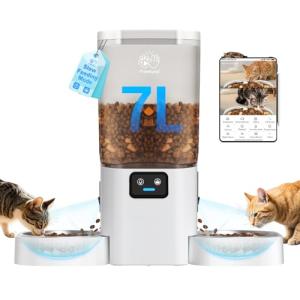
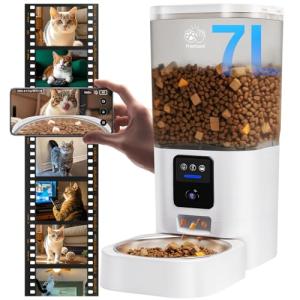
Technical audit of the Petlibro PLAF103 architecture reveals a DC geared motor with a low-RPM profile designed for high-torque kibble shearing. The optical subsystem utilizes a 1080P HD sensor providing a 145-degree field of view, though latency metrics indicate a 2Mbps upstream bandwidth requirement for stable transmission. The wireless protocol is limited to 802.11 b/g/n, which increases susceptibility to signal attenuation in high-density housing environments.
Failure analysis identifies a mechanical reliance on Tuya-based IoT modules, where local schedules may fail if the feeding log fails to synchronize with the cloud during Wi-Fi drops. Furthermore, the 1080P sensor has demonstrated mechanical fatigue in the IR-cut filter over extended duty cycles. Power backup is facilitated by three D-cell batteries, which support mechanical dispensing but do not provide power to the camera or Wi-Fi modules.
Performance metrics indicate a granular scheduling capacity of 10 meals per day, though the plastic impeller blades represent a potential failure point under heavy mechanical stress. The hopper assembly does not meet insect-proof hermetic standards, as indicated by material seal analysis.
For installations requiring superior mechanical resistance to gear stripping, the Faroro variant offers a high-torque silicone impeller system. This unit provides a reference point for visual monitoring standards within the pet feeder cameras classification.