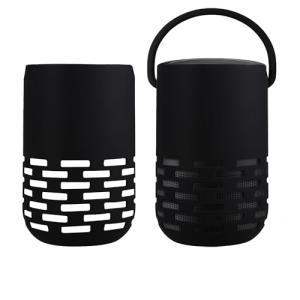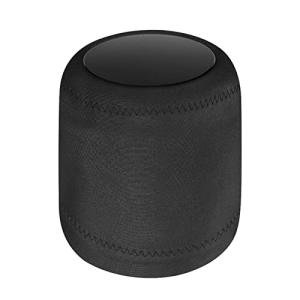

Technical specifications indicate that this protective shroud utilizes a dual-material construction consisting of a friction-fit silicone base and a TPU-coated nylon/polyester mesh top. Material analysis confirms that while the unit is marketed for moisture resistance, it functions as a hydrophobic water-resistant barrier rather than a waterproof enclosure, relying on surface tension to shed liquid during light precipitation. Standardized testing protocols reveal that the non-breathable membrane contributes to thermal retention, which may lead to processor throttling in high-excursion hardware like the HomePod Gen 1 or 2.
Acoustic & Thermal Performance Metrics
Performance metrics demonstrate a measurable acoustic impact, specifically an attenuation of approximately 3-5dB. This damping effect significantly alters the output of beamforming tweeter arrays and reduces microphone array sensitivity. Structural observation suggests that the internal volume of the cover lacks dedicated ventilation for voice coil cooling, which is a critical factor for hardware longevity during extended high-volume operation.
Aggregated specification data lists the following functional attributes:
- Modes of operation: Storage protection, Outdoor deployment (under eaves), Bumper-style impact resistance.
Aggregated data confirms that the chassis is an open-tooling design shared across several generic marketplaces, prioritizing dust exclusion over high-fidelity transparency.
Users requiring native IPX7 ingress protection for external environments should evaluate this specialized hardware alternative to ensure operational reliability without the risk of thermal shutdown.
Detailed documentation for this class of acoustic arrays and their associated protective enclosures can be found within the smart speaker covers repository.