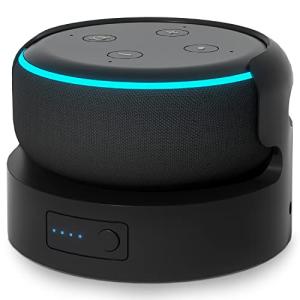

Aggregated specification data lists the Ninety7 Battery Base as a 4-cell lithium-ion power attachment designed for seamless mechanical integration with the Google Home chassis. The electrical architecture provides a capacity of approximately 4200mAh, which translates to an operational range of 6 to 8 hours of audio playback. Power interfacing is achieved via a DC barrel plug that accepts the original manufacturer power supply.
Getty Images Explore
Material analysis confirms the use of a polycarbonate frame wrapped in an insulating fabric to match specific aesthetic standards. However, technical audits of the charging logic indicate a lack of advanced pass-through management, which has been associated with thermal insulation issues and cell exhaustion when the unit remains connected to AC power for extended durations.
Hardware Reliability Audit
Technical teardowns reveal that the electrical engineering prioritizes industrial design over thermal dissipation. Performance metrics demonstrate a slow recharge cycle relative to modern power delivery standards. Standardized user data highlights a high incidence of capacity loss after 6 to 12 months of continuous docking, suggesting that the internal controller does not implement modern trickle-charge limitations.
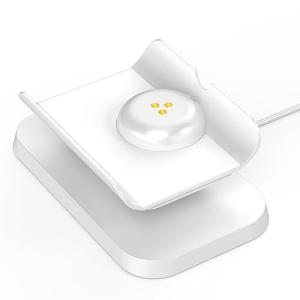
Given the observed failure patterns in integrated controllers, users concerned with long-term cell health might consider transitioning to a magnetic pogo-pin dock to avoid internal battery swelling associated with permanent enclosures.
This unit is a representative example of custom battery bases developed to add portability to stationary smart speakers.