
PRODUCT REVIEW: Midea 12,000 BTU U Shaped Smart Inverter Window Air Conditioner
In-Depth U.S. Market Review
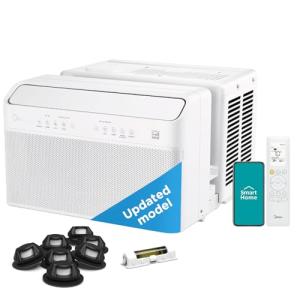
The Midea 12,000 BTU U Shaped Smart Inverter Window Air Conditioner carved out a unique and highly competitive niche in the U.S. home cooling market. It’s positioned as a premium, ultra quiet AC unit for large rooms up to 550 sq. ft., offering a massive upgrade over traditional, noisy window-shaker models. The signature U-shaped design allows you to open and close your window while the unit is installed, a major convenience factor for American homeowners and renters tired of permanently sealing their windows for the summer.
This 12,000 BTU unit targets consumers prioritizing energy savings and smart integration for cooling larger spaces like master bedrooms, open-plan living areas, or large home offices. Its use of inverter technology allows it to modulate its compressor speed, providing a consistent, comfortable temperature and resulting in the 35% energy savings claim. Compared to other 12,000 BTU window units that use older, single-speed compressors, you get drastically quieter operation and a significantly lower electricity bill, making the higher initial cost justifiable for long-term use. This Midea model is clearly a top contender for the best smart window air conditioner for its size.
Technical Analysis
| Specification | Detail & U.S. Context | Analysis |
| BTU Rating (Cooling) | 12,000 BTU, ideal for spaces up to 550 Sq. Ft., which is common for large living rooms or studio apartments. | Excellent cooling capacity for the typical larger U.S. room size; ensures rapid cooling even during peak summer heat waves. |
| Compressor Type | Smart Inverter Technology; allows for variable-speed operation rather than just on/off cycling. | The key to its 35% energy savings and ultra-quiet performance. Reduces strain on the electrical grid and your wallet. |
| Design | U-Shaped, allowing the window to open and close while the AC is installed. | A revolutionary feature solving a major pain point for users; provides flexibility and ventilation control without removal. |
| Noise Level | Ultra Quiet design, often dropping below 42 dBA in low-speed mode (approximate). | Significantly quieter than conventional models (typically 55-60 dBA). Essential for bedrooms and high-concentration workspaces. |
| Smart Control | Wi-Fi enabled, compatible with Alexa and Google Assistant for voice and app control. | Standard for modern smart home integration in the U.S., offering remote scheduling and automation features. |
| Installation | Requires minimal permanent assembly for the two-part U-shape; comes with a specialized bracket kit. | Installation is more involved than a traditional unit but is feasible for a moderately handy user, taking about 30-45 minutes. |
| Power Draw | Energy Star certified with high CEER/EER, reflecting the efficiency of the inverter technology. | Direct financial benefit; lower running costs are a huge motivator for U.S. consumers, especially in high-electricity-cost regions. |
1. Inverter Technology and Temperature Stability
The core of the Midea 12,000 BTU unit's value is its smart inverter compressor . Unlike traditional compressors that constantly cycle on and off at full power—creating noise spikes and temperature swings—this inverter can run at variable speeds. You’ll notice the difference immediately as the room reaches the set temperature quickly.
Once the target is hit, the compressor throttles down to maintain the temperature precisely, which dramatically improves comfort. This constant, low-level operation is the secret to its whisper-quiet performance and the substantial energy savings it provides throughout the cooling season.
2. U-Shaped Design and Sound Isolation
The distinct U-shaped physical design is truly innovative for the U.S. market. It places the noisy compressor and fan motor outside the window, while the window sash acts as a natural sound barrier. This design physically separates the components, explaining the "Ultra Quiet" designation.
The unique C-clamp and bracket installation ensures a secure fit, and crucially, it allows you to maintain the flexibility of opening or closing the window sash . This is a massive improvement over traditional units that require you to seal the window shut completely, blocking light and ventilation when the AC isn't running.
3. Smart Control and Home Automation
Connectivity is standard on this modern appliance, providing Wi-Fi control through a dedicated app and voice command compatibility with major U.S. smart home platforms like Amazon Alexa and Google Assistant. This allows you to check the temperature, adjust the mode, or set schedules while you’re away from home or just from the comfort of your couch.
Setting up geofencing in the app means you can have the unit automatically turn on when you leave work, ensuring the house is perfectly cool when you arrive. The app also tracks energy usage, a feature highly valued by energy-conscious consumers in the U.S. market.
User Profiles
1. Remote Work Power User
You live in a mid-sized U.S. city where summer temperatures routinely spike, and your main office is a large, sunny room (around 500 sq. ft.). You need a powerful AC to handle the heat, but cannot tolerate the noise of a traditional unit that constantly cycles while you're on video calls or trying to concentrate on deep work.
-
Use Case: Cooling your large home office or shared living space quietly during business hours (9 AM to 5 PM) while maintaining clear sound quality for remote meetings.
-
The Fit: The Midea 12,000 BTU Smart Inverter AC is perfect for you. Its ultra-quiet operation means you can run the AC on high without being "that person" with the noisy background during Zoom calls. The smart controls let you pre-cool the room before you even sit down at your desk.
2. The Apartment Renter
You rent an older apartment in a metro area where opening the window for fresh air is a necessity, but you still need powerful cooling for your 550 sq. ft. living area. A traditional window unit would seal off the window completely, which is against your lease rules or simply inconvenient for venting cooking smells or grabbing some fresh air.
-
Use Case: You need powerful cooling during the day but want the flexibility to open the window fully to let in a cool evening breeze or air out the unit without going through the hassle of uninstalling the AC.
-
The Fit: The U-shaped design is a game-changer for you. You can easily open the window sash between the main unit and the outdoor heat exchanger, giving you the natural ventilation you need. The efficient inverter cooling keeps your monthly utility bill reasonable, a huge win for a renter.
3. Energy-Conscious Homeowner
You own an older, mid-century home with single-pane windows and a large master bedroom (500-550 sq. ft.) that struggles to stay cool on the second floor. You are focused on reducing your carbon footprint and saving money on utility bills, but you refuse to sacrifice powerful cooling capacity.
-
Use Case: You need maximum cooling power for a large room but want the lowest possible energy consumption and an Energy Star-rated appliance to qualify for local utility rebates.
-
The Fit: The 35% energy savings from the inverter technology is the main draw. You get the 12,000 BTUs of cooling power you need for that hot upper floor, but because the unit modulates its speed, you're not constantly drawing maximum power, leading to significant savings over a traditional, loud AC unit.
"Complementary HomeTechCorner Category Recommendations"
| Recommended Products | Why This Category Is Useful Specifically for This Product | Short Usage Scenario |
| Smart Wall Outlets | To track and verify the actual energy savings promised by the inverter technology. | You plug your Midea AC into a smart outlet, and a week later, you check the app to see the exact kilowatt-hours consumed, confirming you're saving that 35%. |
| Smart Sensors | To place a dedicated temperature sensor in the center of the room, far from the AC unit, for more accurate climate control. | You place an environmental sensor on your coffee table; the AC uses that reading (instead of its own internal sensor) to ensure the entire living room is 7 2 ∘ F precisely. |
| Voice Assistants | To enable seamless, hands-free operation of the AC unit without reaching for the remote or phone. | You walk into your hot apartment and simply say, "Hey Google, set the living room AC to 6 8 ∘ F ," and the unit springs to life. |
| Smart Power Strips | To ensure surge protection for the high-end inverter electronics, especially during summer storms. | When a sudden afternoon thunderstorm rolls in, your smart power strip protects the sensitive components of the AC from power spikes while keeping other devices connected. |