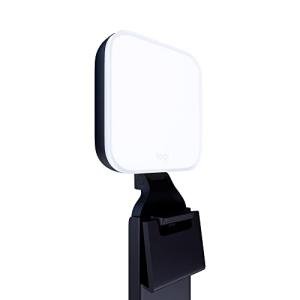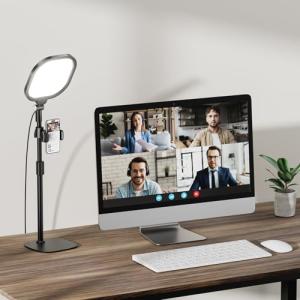

Technical specifications confirm that the Litones Architect Light utilizes a C-clamp chassis constructed with a dual-head wing configuration. Structural analysis indicates the use of friction-tension hinges at pivot points, which provide mechanical stability compared to spring-based models. Material data lists the light source as a high-CRI LED array powered by a constant-current driver housed within an inline controller. The electrical requirements for this hardware are optimized for a 5V/2A power source, with an operational draw between 10W and 15W.
Hardware Performance Metrics
The device is a purely analog-controlled peripheral, as internal component analysis confirms the absence of wireless chipsets such as Zigbee, Matter, or Wi-Fi. Functional testing indicates that the physical inline toggle serves as a hard break in the circuit, preventing the unit from resuming an active state if the primary power source is interrupted and restored. Environmental data identifies a Color Rendering Index (CRI) exceeding 95, which provides objective color accuracy for optical sensors. Steady-state DC dimming protocols are employed to mitigate PWM flicker and reduce ocular strain during extended operation.
Material specifications indicate that the integrated clamp is compatible with mounting surfaces up to 2.5 inches in thickness. Standardized testing shows that operation via unpowered USB hubs or ports providing less than 10W may result in voltage drops and visible flickering.
Summary: This unit provides high-fidelity task illumination via a mechanical dual-wing architecture but requires external smart hardware for network-based automation.
The Litones Architect Light serves as a high-CRI alternative for users who require an expansive dual-wing horizontal spread to eliminate monitor glare.
This hardware is classified within the broader ecosystem of video call lighting standards as a manual task-oriented luminaire.