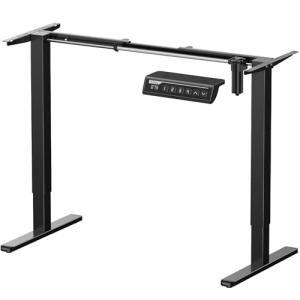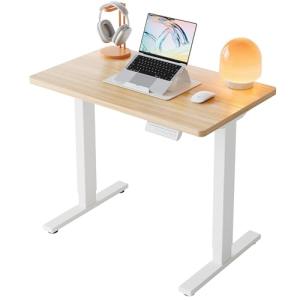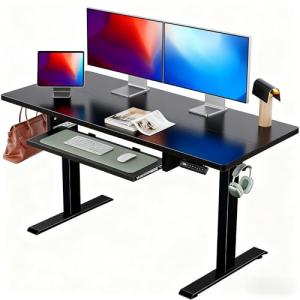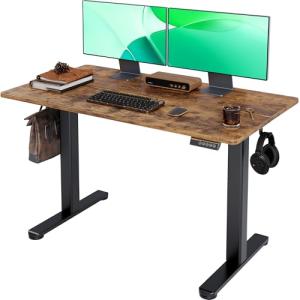

Technical datasheets for the Walkingdesk unit specify a single 24V DC motor integrated into the right-side leg assembly. The work surface consists of a two-piece spliced particle board with a rustic finish. Forensic analysis of user reports indicates a high frequency of motor synchronization failures, often attributed to hall sensor misalignment or uneven weight distribution across the hexagonal drive rod.
Material specifications indicate a noise floor exceeding 50dB, with an increased acoustic signature if the drive rod is not lubricated according to a monthly maintenance cycle. The digital controller features an LED display with four memory presets but lacks local API or Matter protocol support for network integration. The real-world dynamic lift limit is approximately 130 lbs, significantly below the 176lb static rating.
Structural rigidity is inherently lower than single-piece solid tops, leading to potential sagging over a 12-month operational period and minor leveling discrepancies at the desktop seam.
Stability is notably reduced at heights exceeding 40 inches. This unit utilizes a standardized ODM chassis and control box common in the budget sector, prioritizing aesthetic finish over high-torque performance or structural density.
The Walkingdesk rustic brown model provides an aesthetically-focused alternative for light-duty home office use.
This device is positioned within the electric standing desks category as an entry-level ergonomic solution.