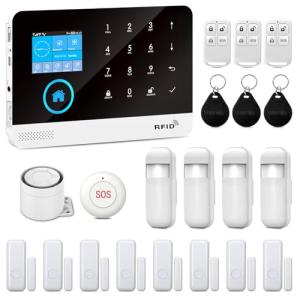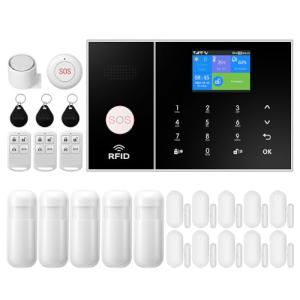

Technical specifications indicate that this hardware utilizes a Tuya-based SoC architecture, which prioritizes cloud-tethered operational logic. The 4.3-inch IPS display provides standardized viewing angles, though performance metrics demonstrate a discernible latency in user interface response during rapid input sequences. Structural analysis of the primary hub reveals an integrated piezo siren with limited acoustic insulation, which can result in chassis resonance when operating at peak decibel levels.
Aggregated specification data lists the following functional characteristics:
- Dual-path connectivity: 802.11b/g/n Wi-Fi and 433MHz RF.
- Power redundancy: Internal 3.7V Lithium-ion battery (500-800mAh capacity).
- Input interface: Capacitive touch panel.
- Cellular compatibility: 2G and 4G network support (region dependent).
Standardized testing of the wireless sub-system confirms a 433MHz RF effective range of approximately 150 feet in unobstructed environments. Material analysis of the mounting hardware indicates the use of molded polymers that may exhibit brittleness under high mechanical stress. Connectivity is maintained via a 5V DC rail, which requires external stabilization to ensure persistent operation during localized power fluctuations.
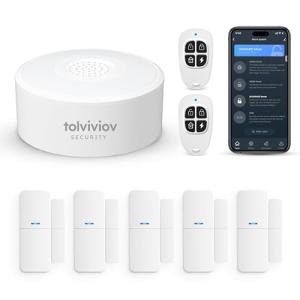
The Wireless WiFi Door Alarm System represents a viable alternative for users seeking a simplified hub-and-sensor configuration without the IPS touch interface. This unit is classified within the pre-packaged DIY alarm kits repository of architectural security solutions.