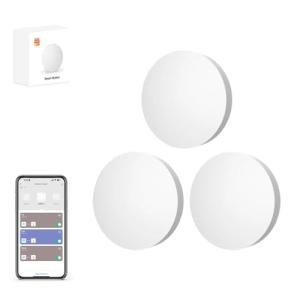
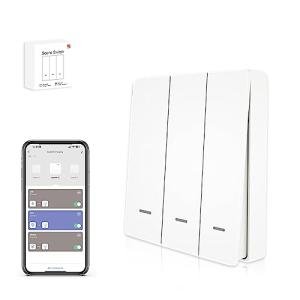
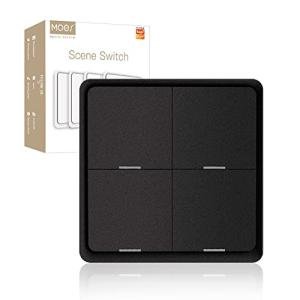
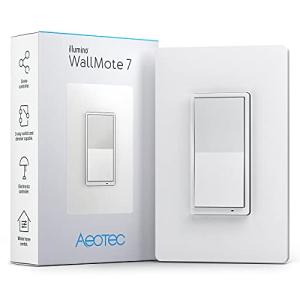
💡 Practical Usage Tips
- Placing a physical trigger on a bedside table allows for the execution of complex "Good Night" routines without the harsh blue light of a smartphone screen.
- It is advisable to stick to intuitive action mappings, such as using a single click for lights and a double click for media, so that guests can operate the system without instruction.
- Users should verify the battery type before installation, as devices utilizing the larger CR2477 coin cell offer significantly longer operational life than standard CR2032 models.
- For homes with thick concrete walls, positioning a Zigbee router or repeater halfway between the hub and the button ensures consistent signal delivery and reduces command latency.
✅ What to Look For & ⚠️ What to Avoid
✅ Must-Have Features
- Prioritize devices that support local execution protocols like Zigbee 3.0 or Z-Wave 800 Series to ensure commands work instantly and function even during internet outages.
- Look for hardware that offers distinct tactile feedback, such as a mechanical click, to confirm that an action has been registered without needing to look at the device.
- Versatile mounting options are essential, so selecting a model with a magnetic backplate like the Philips Hue Smart Button provides flexibility for use on fridge doors or detachable wall plates.
⚠️ Red Flags
- Avoid buttons that rely exclusively on standard Wi-Fi, as the high power consumption required to maintain a connection often leads to rapid battery drainage and slow "wake-up" response times.
- Be cautious of capacitive touch interfaces in bedroom settings, as they lack physical confirmation and can be easily triggered by accidental brushes in the dark.
- Steer clear of proprietary hubs if possible, unless the specific ecosystem offers unique features that cannot be replicated by universal coordinators.
🛡️ Build Quality & Performance
The physical construction of a smart button directly influences its longevity and user satisfaction. Premium devices utilize a high-quality tactile dome switch rated for hundreds of thousands of cycles, providing a crisp "click" that cheap plastic membranes fail to replicate. Durability extends to the enclosure itself; buttons designed with gaskets offer resistance to moisture, making them suitable for bathrooms or kitchens where humidity levels fluctuate.
Furthermore, the choice of wireless radio impacts performance significantly. While Sub-1GHz frequencies offer superior wall penetration, standard 2.4GHz devices can struggle in areas with heavy Wi-Fi congestion. For users seeking a robust, platform-agnostic solution with excellent build materials, the Flic Smart Button 3-Pack remains a benchmark for its premium finish and reliable Bluetooth architecture, despite requiring a bridge for advanced integrations.
🏆 Top Recommendations
| Best For |
Model Name |
Key Feature |
Why It Wins |
| Zigbee Mesh |
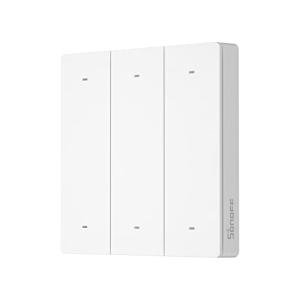
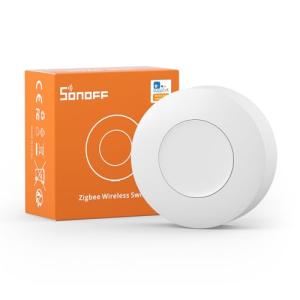
SONOFF SNZB-01P |
Low Latency |
Fast local execution and reliable battery design. |
| Lighting Control |
TP-Link Tapo S200B |
Rotary Encoder |
Allows smooth dimming via rotation, not just clicking. |
| Versatility |
Flic 2 Smart Button |
Broad Integration |
Works with almost any platform via Bluetooth. |
| Future Proof |
Nanoleaf Smart Switch |
Matter-over-Thread |
Leverages the latest standard for cross-brand use. |
❓ Frequently Asked Questions
Do these buttons require a central hub to work?
In most cases, yes. Devices using Zigbee, Z-Wave, or Sub-1GHz frequencies require a compatible hub or coordinator to bridge the signal to your network. Bluetooth buttons can sometimes connect directly to a phone, but a hub is recommended for always-on home control.
Can one button trigger multiple different devices?
Absolutely. Through automation platforms like Home Assistant, Alexa, or IFTTT, a single press can trigger a "scene" that adjusts the thermostat, turns off lights, and locks the door simultaneously.
What is the typical battery life for these devices?
Battery life varies by protocol and usage. Zigbee and Low Energy devices typically last between 1 to 2 years on a single coin cell, whereas Wi-Fi-based buttons may deplete their batteries in just a few months.