Getting the internal temperature of a meal right is the difference between a culinary success and a safety hazard. Whether it is a quick weeknight roast or a slow-smoked brisket, having a reliable tool to measure heat levels ensures every dish is juicy and cooked to perfection. This guide breaks down the essential hardware and features to consider when selecting the right thermometer for any kitchen.
Food Thermometers
Get precise temperature readings for perfect cooking every time with our range of reliable food thermometers
Product List
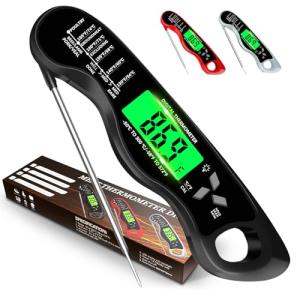
Waterproof Backlit Meat Thermometer
Giftsfaloy
Product Review Score
4.39 out of 5 stars
113 reviews$8.25

Quick-Read Digital Meat Thermometer
Thermomaven
Product Review Score
4.8 out of 5 stars
215 reviews$29.99 $23.99

ThermoPro TP19H Instant Thermometer
Thermopro
Product Review Score
4.54 out of 5 stars
123 reviews$19.99 $13.29

Digital Cooking Thermometer
Thermopro
Product Review Score
4.62 out of 5 stars
69 reviews$14.99 $11.29
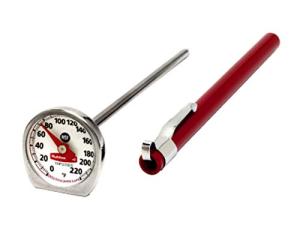
Pocket Meat Thermometer
Rubbermaid Commercial Products
Product Review Score
4.13 out of 5 stars
201 reviews$15.29 $9.89

ThermoPro TP16 Digital Thermometer
Thermopro
Product Review Score
4.87 out of 5 stars
163 reviews$29.99 $17.99
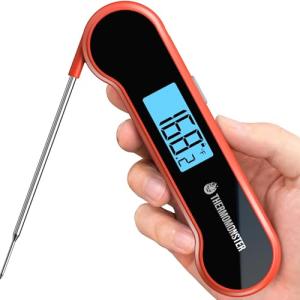
Quick Read Meat Thermometer
Thermomonster
Product Review Score
4.95 out of 5 stars
62 reviews$15.99

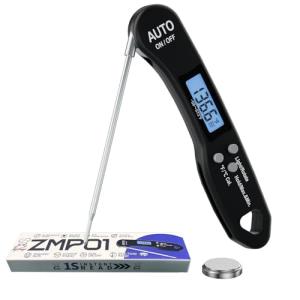
Quick Foldable Food Thermometer
Meatender
Product Review Score
4.95 out of 5 stars
130 reviews$5.99

Instant Read Meat Thermometer
Thermopro
Product Review Score
4.28 out of 5 stars
133 reviews$17.99 $9.89

Instant Read Meat Thermometer
Andaxin
Product Review Score
4.66 out of 5 stars
126 reviews$9.98 $7.99
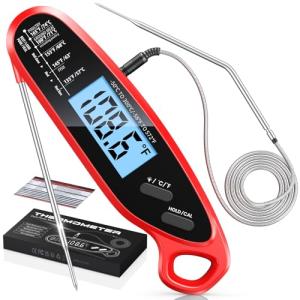
Vuwwey Dual Probe Meat Thermometer
Vuwwey
Product Review Score
4.42 out of 5 stars
11 reviews$15.99 $12.99
💡 Practical Usage Tips
- Insert the probe into the thickest part of the meat while avoiding bones, as contact with bone can result in an artificially high temperature reading.
- Clean the probe with hot, soapy water after every use to prevent cross-contamination between raw and cooked food.
- Perform a periodic calibration check using an ice-water bath to ensure the digital display remains accurate over time.
- Pull meat off the heat source about five degrees before it reaches the target temperature, as the internal heat will continue to rise during the resting phase.
✅ What to Look For & ⚠️ What to Avoid
Must-Have Features:
- Rapid response times are essential for accuracy, and the Thermomaven Instant Read provides a nearly immediate result to prevent overcooking.
- A thermocouple sensor is often more precise than standard models, offering better performance for professional-style results.
- Look for an IP67 rating if the tool will be used near heavy steam or if there is a risk of it being dropped into a sink.
- A high-contrast backlit LCD is vital for reading temperatures in low-light conditions, such as during evening grilling sessions.
Red Flags to Avoid:
- Be cautious of units that lack water resistance, as steam can easily seep into the housing and cause the electronics to fail.
- Avoid thermometers with thick, blunt tips that tear through the meat, which can cause flavorful juices to escape during the cooking process.
- Watch out for "instant read" claims that actually take longer than ten seconds, as this delay allows heat to escape the oven or grill.
- Flimsy hinges on foldable models are a common failure point where internal wiring can become frayed or disconnected after repeated use.
🛡️ Build Quality & Performance
The durability of a food thermometer depends largely on its housing and sensor type. Most modern units utilize an ABS plastic chassis, which provides a lightweight feel and decent impact resistance. However, premium models often include ultrasonic welding on the seams to create a hermetic seal against moisture. This is particularly important because kitchen environments are naturally prone to splashes and high humidity.
Performance is measured by how quickly the internal NTC thermistor or thermocouple can stabilize. High-speed processors allow some devices to sample temperature data multiple times per second, giving the cook a live look at the rising heat levels. For those who prefer a more traditional approach, the Rubbermaid Pocket Size offers a battery-free mechanical design that relies on physical heat conduction through a bimetallic coil. While slower than digital counterparts, these analog tools are virtually indestructible and perform reliably in high-heat environments where electronics might struggle.
🏆 Top Recommendations
| Best For | Model Name | Key Feature | Why It Wins |
|---|---|---|---|
| Professional Speed | Thermomaven 1-Sec | Thermocouple Sensor | Offers the fastest 1-second data acquisition. |
| Ease of Use | ThermoPro TP19H | Auto-Rotating Display | Gravity sensor makes it readable at any angle. |
| Long-Term Roasting | ThermoPro TP17H | Dual-Probe System | Monitors two pieces of meat at the same time. |
| Surface Scanning | Etekcity Lasergrip | Non-Contact Laser | Checks pizza stones and pans without touching. |
❓ Frequently Asked Questions
What is the difference between a thermistor and a thermocouple?
Thermistors are common in budget-friendly models and take a few seconds to stabilize. Thermocouples are high-performance sensors that can provide a reading in one second or less by measuring voltage changes at the very tip of the probe.
Can these thermometers be left inside a hot oven?
Handheld "instant-read" models should never be left inside an oven, as the plastic housing will melt. Only models with a separate probe and a heat-resistant mesh cable are designed to stay inside the oven during the cooking process.
How do you know if a thermometer is waterproof?
Look for an IP rating in the specifications. A rating of IP65 means it can handle splashes, while IP67 indicates the device can survive a brief accidental drop into water.