An audio amplifier serves as the heartbeat of any home sound system, bridging the gap between a music source and the speakers that fill a room with sound. Whether setting up a dedicated listening room or a simple desktop arrangement, choosing the right unit requires balancing raw power with signal clarity. Modern options now range from traditional analog receivers to compact digital units that fit in the palm of a hand.
Audio Amplifiers
Get ready to boost your sound experience with powerful audio amplifiers that bring music and movies to life
Product List
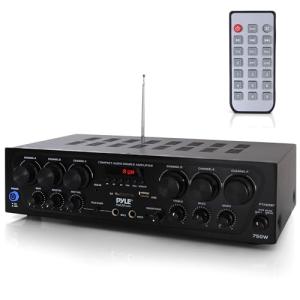
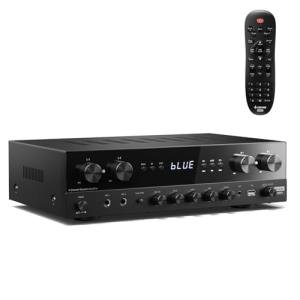
Donner 1000W Bluetooth Amplifier
Donner
Product Review Score
4.46 out of 5 stars
24 reviews$142.49 $121.12
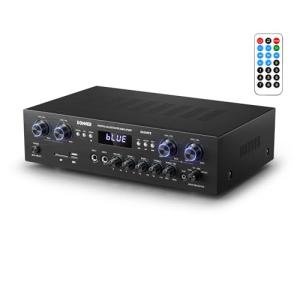
Donner 4-Channel Bluetooth Amp
Donner
Product Review Score
4.79 out of 5 stars
168 reviews$129.99 $93.85
💡 Practical Usage Tips
- It is important to provide at least three to four inches of vertical clearance above traditional Class AB receivers to ensure heat can escape properly.
- Using high-quality speaker wire with a thickness of at least 16AWG helps maintain signal integrity and prevents power loss over longer distances.
- For amplifiers that feature Bluetooth connectivity, placing the unit away from routers and microwaves reduces the chance of wireless interference.
- Connecting a dedicated powered subwoofer to units with a sub-out port can significantly take the strain off smaller bookshelf speakers.
✅ What to Look For & ⚠️ What to Avoid
Must-Have Features:
- Look for units with a Discrete Power Stage as found in the Sony STRDH190 for a more natural and warm sound profile.
- Seek out amplifiers with an aluminum chassis, which acts as a giant heat sink to keep internal components cool during long listening sessions.
- Models offering Balanced XLR inputs are ideal for minimizing electrical noise in professional or high-end home setups.
Red Flags & Warnings:
- Be cautious of extreme power claims like "2000W Peak" on budget models, as these often represent a split-second burst rather than continuous power.
- Watch out for an audible "hissing" sound during quiet moments, which usually indicates a high Noise Floor in lower-priced digital chipsets.
- Avoid placing compact amplifiers inside closed wooden cabinets without fans, as they can reach high temperatures and shut down unexpectedly.
🛡️ Build Quality & Performance
The physical construction of an amplifier often dictates its lifespan and sound character. Higher-end models typically feature a Reinforced Frame to dampen vibrations that can interfere with sensitive electronic parts. Metal casing is preferred over plastic, not just for durability, but because it provides essential shielding against electromagnetic interference from nearby phones and electronics.
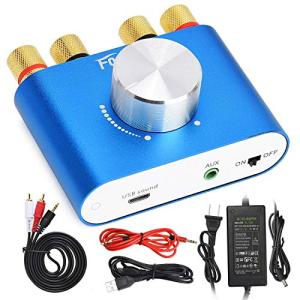
Performance is often a result of efficient heat management. While compact digital models stay relatively cool using advanced chipsets, larger analog receivers rely on heavy Toroidal Transformers and large cooling fins. A robustly built unit like the Fosi Audio ZA3 manages to combine a small footprint with excellent thermal stability, making it a reliable choice for daily desktop use.
🏆 Top Recommendations
| Best For | Model Name | Key Feature | Why It Wins |
|---|---|---|---|
| Vinyl Lovers | Sony STRDH190 | Phono Pre-amp | Reliable analog signal for turntables. |
| Power Users | Fosi BT20A Pro | TPA3255 Chipset | Huge power in a tiny, cool-running frame. |
| DIY & Custom | TPA3116D2 Board | 2.1 Channel Out | Perfect for building custom speakers. |
| Aesthetic & Warmth | Douk ST-01 PRO | Vacuum Tubes | Smooth sound and a classic VU meter. |
❓ Frequently Asked Questions
What is the difference between Peak Power and RMS?
Peak Power refers to the maximum amount of energy an amplifier can handle for a fraction of a second, while RMS (Root Mean Square) describes the continuous power the unit can safely provide for hours of listening.
Can I connect 4-ohm speakers to an 8-ohm amplifier?
It depends on the amplifier's design; many modern Class D units can handle low-impedance loads, but doing so on an unsupported amplifier can cause it to overheat or trigger a protection mode.
Why does my amplifier have a faint humming sound?
A low hum is often caused by a Ground Loop or interference from other electronics plugged into the same power outlet.