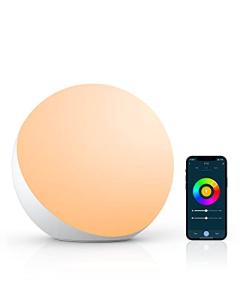

Performance data for the Lepro TB1 confirms the use of Addressable RGB (RGB+IC) technology, allowing for discrete control of LED segments to produce multi-color gradients. The "AI" functionality is implemented via a software-layer Large Language Model (LLM) within the Lepro+ app, translating natural language prompts into specific lighting patterns. The chassis is constructed from a lightweight polymer designed for 360-degree diffusion.
Technical constraints include a 2.4 GHz Wi-Fi radio, which necessitates isolation in high-traffic network environments to prevent de-authentication. The device lacks a local API, making it dependent on cloud servers for the majority of its advanced features. Thermal management is passive, relying on the surface area of the plastic housing for heat dissipation.
Standardized testing protocols show that the Lepro TB1 maintains lower latency during music synchronization compared to generic Tuya-based clones due to optimized app-to-device firmware handshakes.
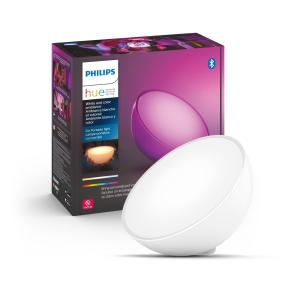
The Philips Hue Go Portable offers a significant upgrade in material build quality and mesh reliability for users who do not require AI-driven scene generation. This unit is part of the smart lighting for battlestations hardware category.