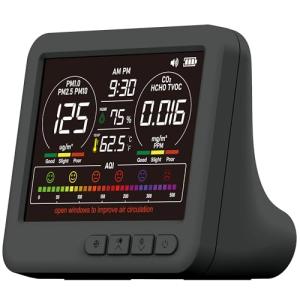

Technical analysis of the Inkbirdplus PTH-9C identifies it as a localized telemetry node utilizing a Non-Dispersive Infrared (NDIR) sensor for carbon dioxide detection. Aggregated specification data confirms a CO 2 measurement range of 400 to 5000 ppm, utilizing industry-standard sensing to minimize cross-gas sensitivity. The hardware architecture features a 2400mAh 18650-style lithium battery, though performance metrics demonstrate that active 2.4GHz Wi-Fi transmission necessitates a constant 5V/1A USB power source for low-latency data updates.
Hardware Integration & Calibration
Material analysis of the internal chassis suggests a shared ODM design common among multi-gas monitors, though the Inkbirdplus variant utilizes a specific firmware iteration for the Tuya/Smart Life ecosystem. Standardized testing protocols indicate a mandatory 24-48 hour atmospheric baseline calibration period to ensure sensor accuracy upon deployment. Support is provided for localized visual monitoring via a high-contrast VA display featuring a tiered air quality index indicator.
Operational data indicates that while the unit functions as a visual reference, its reliance on cloud-based logic paths introduces potential latency in complex automation sequences.
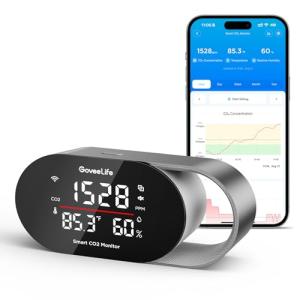
The GoveeLife Smart Air Quality Monitor serves as an architectural alternative for users requiring a lower-latency distributed gateway to trigger specific manufacturer-ecosystem appliances such as integrated purifiers or humidifiers.
This unit is classified within the broader hardware category of air quality alarms, serving as a modular component for environmental data acquisition.