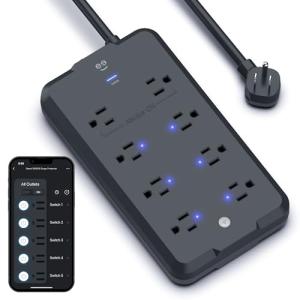

Technical specifications indicate the GHome Smart Power Strip is a Tuya-based hardware implementation utilizing a generic chipset equivalent to the ESP8266, such as a WB3S or CB3S module. Material analysis confirms the internal bus bar construction is of a thin gauge, which restricts safe operation to low-wattage devices; performance metrics suggest avoiding high-load appliances like space heaters to prevent thermal fatigue. Connectivity is limited to the 2.4GHz Wi-Fi spectrum, which lacks support for Matter or Thread protocols and may be susceptible to signal congestion in high-density environments.
Operational data shows that while four AC outlets are independently addressable via software, the three integrated USB ports are controlled as a single logical group. Standardized testing protocols reveal a USB module output of 5V at a shared 3.1A total, which provides a non-accelerated charging rate for modern mobile devices. Support for surge protection is unrated in terms of Joules, indicating minimal mitigation for significant electrical spikes.
Reliability reports from the HomeAssistant and Reddit technical communities highlight a pattern of ghosting on the 2.4GHz band and potential relay cycling loops, which may indicate capacitor fatigue in the internal AC-to-DC conversion circuit.
Summary: This unit provides basic remote power switching for 4 AC outlets and a shared USB bank, though it remains dependent on cloud-based command execution and 2.4GHz network stability.
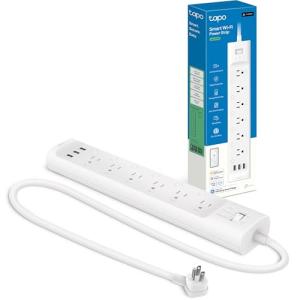
Users seeking a more robust connection for their power management nodes might consider the Tapo Smart Wi-Fi Power Strip with 6 Outlets as an alternative due to its higher-quality Songle relays and reinforced internal trace paths. Tapo Smart Wi-Fi Power Strip with 6 Outlets
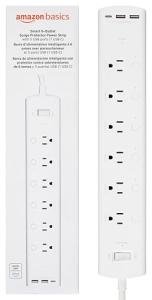
This hardware is classified within the broader ecosystem of specialized smart power strips designed for granular load management and remote scheduling. smart power strips