

PRODUCT REVIEW
In-Depth U.S. Market Review
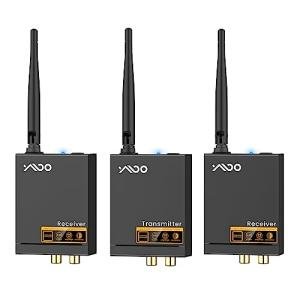
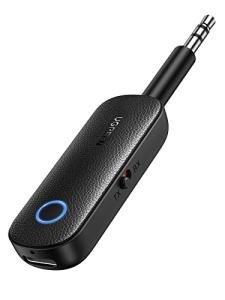
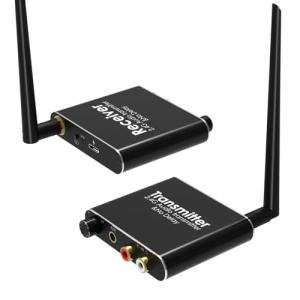
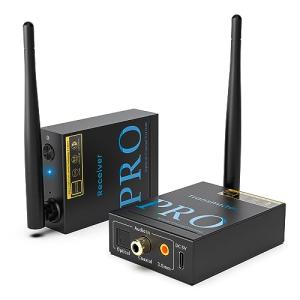
The Bluetooth 5.2 Transmitter for TV and Headphones carves out a focused niche as a dedicated audio solution for the American living room. Its primary role is to upgrade your television, desktop, or gaming console with high-quality, lag-free wireless audio transmission. This is especially vital for households where quiet viewing is essential, or where one person wants to watch TV while another is sleeping or working nearby. It's a fantastic Bluetooth transmitter for TV and quiet-time viewing.
By utilizing the Bluetooth 5.2 standard, this device delivers a more stable connection and better power efficiency compared to older 4.0 or 4.2 models. It sits in the value-performance sweet spot, offering key features like dual-headphone pairing and multiple connectivity options that put it ahead of cheaper, less versatile dongles.
Compared to full transmitter/receiver kits, this model focuses solely on transmission (TX), simplifying the design and reducing the cost. You get a feature-rich, dedicated low-latency solution designed explicitly for video content. While other devices can transmit, this one is optimized for the TV environment, ensuring clear dialogue and perfectly synchronized action without the complexity of a two-unit system.
Technical Analysis
| Specification | Detail & U.S. Context | Analysis |
| Bluetooth Standard | Bluetooth 5.2 | This modern standard offers improved stability, faster pairing, and higher bandwidth efficiency over older generations. This is crucial for maintaining a solid connection between the device and your headphones. |
| Functionality | Dedicated Transmitter (TX) Only | By focusing solely on transmitting audio from a source (like a TV) to headphones, the device minimizes complexity and maximizes performance for video use cases. |
| Simultaneous Pairing | Dual-Link Support (2 Headphones) | The ability to connect two pairs of headphones simultaneously is a must-have for couples or parents watching TV late at night, ensuring quiet shared viewing. |
| Input/Output | Optical (TOSLINK) and 3.5mm AUX/RCA | Offering both digital and analog inputs ensures universal compatibility with virtually every modern smart TV, older plasma TV, and audio-video receiver sold in the U.S. |
| Latency | Low Latency Codec Support | This is arguably the most important feature for TV use. Low latency ensures the sound of voices and effects is perfectly synchronized with the on-screen action, eliminating distracting delays. |
1. Low-Latency Performance for Home Cinema
The core technology within this Bluetooth 5.2 Transmitter for TV and Headphones is its commitment to low latency. It must be able to process and transmit audio fast enough to match the video signal, a challenge that standard Bluetooth often fails.
By incorporating a dedicated low-latency codec, this device ensures that your movie watching and gaming sessions remain fully immersive. You will not experience the notorious lip-sync delay, allowing you to enjoy action movies and quick-response video games without an annoying audio echo.
2. Versatile Connectivity Options for Every TV
A major technical strength is the comprehensive range of connection methods provided. You can connect it digitally via the Optical (TOSLINK) cable, which bypasses the TV’s internal digital-to-analog converter for the cleanest possible audio signal. This is preferred for high-fidelity sound.
Additionally, the standard 3.5mm auxiliary and RCA connections are available for older televisions or other analog sources. This universal compatibility means that whether you have a brand-new OLED or a decades-old secondary TV, this single transmitter will get the job done.
3. Dual-Link Functionality for Shared Quiet Viewing
The dual-link feature is critical for a device focused on the home environment. It allows you to simultaneously pair two sets of wireless headphones to the single transmitter. This is essential for a shared media experience.
Imagine you and your partner want to watch a movie late at night without disturbing the children. This feature makes it easy for both of you to enjoy the full volume and clarity of the film in your own headphones, creating a silent, shared cinema experience right in your living room.
User Profiles
The product is best suited for quiet households, shared living spaces, and avid gamers who need precision audio.
1. The Night Owl Viewer
You are a person who stays up late to watch streaming shows, movies, or the news after the rest of the household has gone to bed. You rely on high-quality wireless headphones to avoid waking anyone up.
-
Use Case: It’s 11 PM, and you’re starting the next episode of a highly dramatic streaming series. You need the sound loud enough to catch every whisper and explosion without it leaking into the adjacent bedrooms.
-
The Fit: You plug the transmitter into the TV’s optical port, connect your headphones, and enjoy powerful, high-fidelity sound. The low-latency ensures the tense on-screen dialogue perfectly matches the audio you hear.
2. The Apartment Gamer
You live in an apartment or dorm setting where noise levels must be strictly controlled, but you play competitive, reaction-time-dependent video games on a console or PC connected to your main TV.
-
Use Case: You are playing an online multiplayer game where audio cues (like footsteps or distant gunfire) are critical to success, and you need to hear them instantly without lag, all while keeping the volume low for neighbors.
-
The Fit: The low-latency codec delivers the game audio with near-zero delay directly to your gaming headset, giving you a competitive edge without disturbing anyone outside your unit.
3. The Hearing-Impaired Spouse
One person in the relationship has some hearing loss and requires the TV volume significantly higher than the other, causing a constant source of conflict during shared viewing.
-
Use Case: You and your spouse want to watch a documentary together. Your spouse needs the volume at a comfortable level, but you require a much higher volume to hear the narration clearly.
-
The Fit: The transmitter allows you to pair two headphones. You can set the volume on your personal headset to your required level, while your spouse listens at a different, lower volume on their headset, resolving the household volume dispute entirely.
"Complementary HomeTechCorner Category Recommendations"
| Recommended Products | Why This Category Is Useful Specifically for This Product | Short Usage Scenario |
| Premium Noise Cancelling Headphones | These are the intended pairing for a TV transmitter, ensuring maximum audio immersion and clarity, especially when one person has a different volume preference. | You put on your premium over-ear headphones and connect to the transmitter, completely blocking out the sounds of the kitchen while you watch your favorite film. |
| Smart Displays | A smart display can be used for secondary viewing or as a hub that can also feed audio to the transmitter via its auxiliary output. | You use your smart display on your nightstand to control the living room lights via voice, while the TV transmitter delivers the sound of the late-night news to your headphones. |
| Streaming Devices | Since the transmitter connects to the TV, it often pairs with an external streaming stick or box, providing a high-quality audio source. | You plug the transmitter into the back of your premium streaming box, ensuring that the high-resolution audio from your favorite app is transmitted digitally to your headphones. |
| Av Control | A universal smart remote can simplify the process of switching inputs on the TV or AV receiver before the transmitter is used. | You pick up your smart remote, press one button to switch the TV input to the console, and the audio transmitter is instantly ready to deliver lag-free gaming sound to your headset. |
| Cable Management For Entertainment Centers | You will need to neatly route the optical or RCA cable connecting the transmitter to the back of your TV or receiver. | You carefully secure the transmitter's cables behind your entertainment stand, ensuring the device is out of sight but still has a clear path for its signal. |