Creating a professional audio setup no longer requires a room full of complex gear and expensive interfaces. Modern studio USB microphones deliver high-fidelity sound by combining high-quality capsules with internal processing power, allowing anyone to capture crystal-clear vocals or instruments directly into a computer. Whether for podcasting, music production, or professional streaming, finding the right balance of hardware and features is essential for achieving a polished, studio-grade result.
Studio USB Microphones
Discover high-quality studio USB microphones that capture crystal-clear sound for your recordings and streaming sessions
Product List
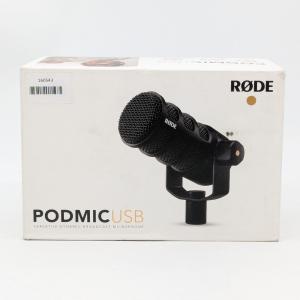
RØDE PodMic Streaming Microphone
Rode
Product Review Score
4.38 out of 5 stars
117 reviews$209.00 $182.97
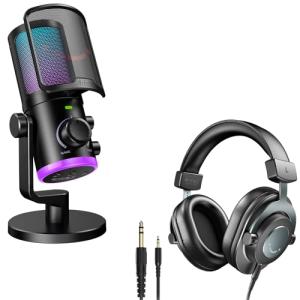
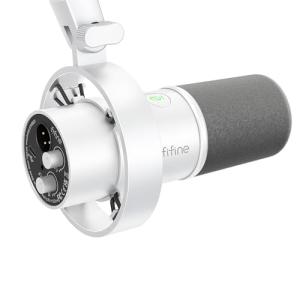
FIFINE K688 Dynamic Microphone
Fifine
Product Review Score
4.79 out of 5 stars
224 reviews$74.99 $52.48
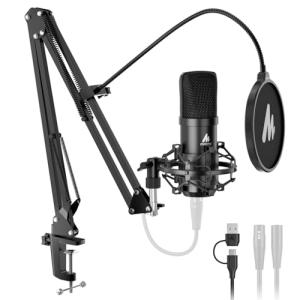
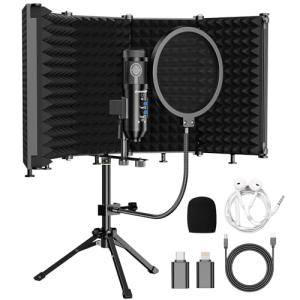

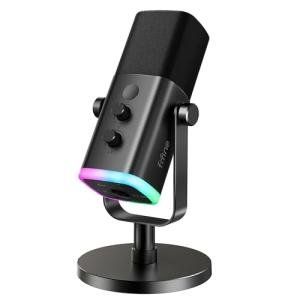
FIFINE XLR/USB Gaming Microphone
Fifine
Product Review Score
4.98 out of 5 stars
161 reviews$54.99 $44.99
💡 Practical Usage Tips
- Positioning the microphone between four to six inches away from the mouth typically yields the most natural vocal tone without introducing excessive room echo.
- Using a SHOCK MOUNT is highly recommended to prevent the vibrations from keyboard typing or desk bumps from ruining a clean recording.
- For those working in rooms with hard surfaces, adding soft materials like rugs or curtains can significantly reduce the "boxy" sound caused by REAR-AXIS REFLECTIONS.
- Connecting the device directly to a computer port rather than a USB hub ensures the microphone receives stable power and maintains a consistent digital connection.
✅ What to Look For & ⚠️ What to Avoid
MUST-HAVES:
- Look for a ZERO-LATENCY MONITORING jack, which allows for hearing the voice in real-time without any distracting echo or delay.
- A high BIT DEPTH, such as the 24-bit or 32-bit float found on the RØDE NT1 5th Gen, provides much more flexibility when editing audio later.
- Physical controls for gain and muting are incredibly helpful for making quick adjustments during a live session without clicking through software menus.
RED FLAGS:
- Microphones with permanently attached USB cables can be a liability, as a single frayed wire could render the entire device useless.
- Be cautious of lightweight plastic housings that lack internal EMI SHIELDING, as these often pick up annoying hums from nearby electronics.
- Avoid devices that rely on legacy MINI-USB ports if durability is a priority, as these connectors are prone to mechanical failure over time.
🛡️ Build Quality & Performance
The physical construction of a studio microphone is often the first indicator of its long-term performance. Professional-grade units typically feature a ZINC ALLOY or steel chassis, which provides the necessary mass to dampen vibrations and protect the sensitive internal CONDENSER CAPSULE. A heavy, metal body acts as a natural barrier against electromagnetic interference, ensuring that the signal remains clean even in environments crowded with monitors and mobile phones.
Performance is further defined by the internal electronics, specifically the PREAMP and the converter. While entry-level models provide standard CD-quality audio, premium options like the RØDE NT-USB+ utilize advanced digital signal processing to color the sound, giving it a rich, "broadcast" quality right out of the box. The goal is to find a microphone that feels substantial in the hand and provides enough digital headroom to capture loud sounds without distortion.
🏆 Top Recommendations
| Best For | Model Name | Key Feature | Why It Wins |
|---|---|---|---|
| Pro Studio | RØDE NT1 5th Gen | 32-bit Float Audio | Virtually impossible to clip the audio signal digitally. |
| Versatility | Blue Yeti | Multi-Pattern Array | Four different pickup patterns for any recording scenario. |
| Noisy Rooms | RØDE PodMic USB | Dynamic Capsule | Naturally ignores background noise and hum. |
| Travel/Small Desk | NT-USB Mini | Magnetic Base | Compact size with impressive professional clarity. |
❓ Frequently Asked Questions
Do I need a condenser or a dynamic microphone?
Condenser microphones are better for capturing fine details and high frequencies, making them ideal for studio vocals. Dynamic microphones are less sensitive to background noise, which makes them a better choice for untreated rooms or loud environments.
What is the benefit of a "hybrid" XLR/USB microphone?
A hybrid microphone provides the convenience of a direct USB connection today while allowing for a future upgrade to a professional audio interface via the XLR port. This ensures the microphone can grow with a studio setup over time.
Is a higher sampling rate always better?
While higher rates like 192kHz capture more data, most listeners cannot distinguish them from standard 48kHz audio. For most users, a stable bit depth of 24-bit is more important for overall sound quality than an extremely high sample rate.