💡 Practical Usage Tips
- For devices utilizing an NDIR sensor to measure CO2 levels, always allow the hardware to run for a full 24-hour cycle to establish a proper calibration baseline.
- When transporting equipment with motion-based triggers, such as golf sensors, ensure the items remain immobile to prevent the internal accelerometer from waking the device and draining the battery.
- Users implementing home security sensors should verify that their transformer can supply 16V-24V AC, as older 10V systems may cause the hardware to reset when infrared LEDs activate.
- To ensure consistent data logging on mobile devices, exclude the companion application from the operating system's battery optimization list to prevent background signal termination.
✅ What to Look For & ⚠️ What to Avoid
Must-Have Features
- Look for systems that utilize sub-GHz radio frequencies for sensors, as this penetrates walls better than standard Wi-Fi or Bluetooth.
- High-quality environmental monitors should offer local-first control logic, meaning they continue to operate fans or heaters even when the internet connection is lost.
- For video-based monitoring, prioritizing a sensor with HDR capabilities ensures that details remain visible even in high-contrast lighting situations.
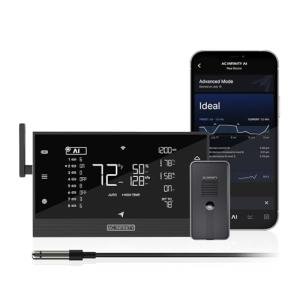
- The AC Infinity AI Controller is a prime example of a system that calculates complex metrics like Vapor Pressure Deficit rather than just basic temperature.
Common Red Flags
- Avoid power adapters that utilize thinner wire gauges (such as 30% less copper than OEM standards), as this leads to increased electrical resistance and heat buildup.
- Be cautious of Bluetooth Low Energy (BLE) sensors with non-replaceable batteries if you intend to use them heavily, as constant activation shortens the lifespan significantly.
- Systems that rely entirely on the cloud for critical notifications can introduce latency delays of 5 to 15 seconds, which is less than ideal for real-time monitoring.
🛡️ Build Quality & Performance
The durability of a sensor bundle is often defined by its ability to withstand the specific environment it monitors. For outdoor or athletic applications, looking for an IP67 rating is essential to prevent moisture and dust from damaging internal circuitry. Inside the home, the quality of connectors plays a major role; proprietary interconnects, like those found on certain environmental controllers, often use precise PWM signal mapping to ensure smooth operation, though they limit compatibility with third-party fans without adapters.
Power delivery components also vary significantly in quality. Budget-friendly bundles often save costs by reducing the thickness of internal copper traces and omitting active surge protection. This can result in higher thermal output and voltage ripple that may degrade sensitive electronics over time. For critical applications, such as neonatal monitoring, users often prefer the redundant stability of wired connections found in units like the Xahpower 2-in-1 Kit, even if it means sacrificing modern wireless conveniences.
🏆 Top Recommendations
| Best For |
Model Name |
Key Feature |
Why It Wins |
| Indoor Gardening |
AC Infinity AI Controller |
NDIR CO2 Sensor |
Offers true molecular analysis and VPD calculation. |
| Golf Analytics |
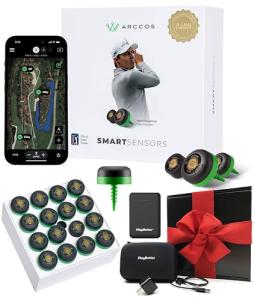
Arccos Gen 4 Bundle |
Impact Triggers |
Lightweight IP67 sensors with minimal swing weight impact. |
| Home Climate |
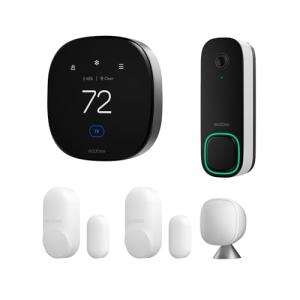
ecobee3 Lite Bundle |
Sub-GHz Sensors |
Superior wall penetration compared to Bluetooth options. |
| Baby Monitoring |
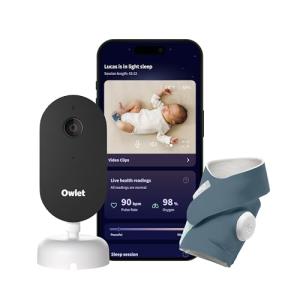
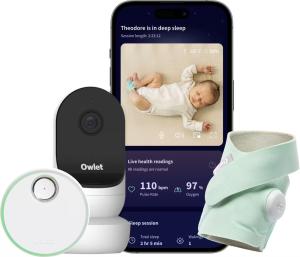
Owlet Dream Duo |
PPG Biometrics |
Tracks heart rate and oxygen levels with local fail-safes. |
❓ Frequently Asked Questions
Do smart sensors require a paid subscription to work?
It depends on the specific hardware. Systems like the Arccos Gen 4 require an active subscription to process the data collected by the sensors. Conversely, devices like the ecobee3 Lite can perform their primary scheduling and local control functions without any recurring fees.
Why do some sensors use 915MHz instead of Wi-Fi?
Frequencies like 915MHz are considered sub-GHz protocols. They are less crowded than the standard 2.4GHz Wi-Fi band and are physically better at penetrating solid objects like walls and floors, making them ideal for placing sensors in distant rooms.
Can I replace the batteries in all smart sensors?
No, this varies by model. The Arccos sensors, for example, have sealed internal batteries that are non-replaceable to maintain their waterproof rating. Other devices, like the ecobee SmartSensors, typically use standard coin cells that can be easily swapped out by the user.