Modern homes are evolving into fully automated environments, and Smart Ceiling Fans have become a cornerstone of this transformation. These devices blend classic air circulation with advanced wireless controls, allowing for precise climate management through smartphones or voice commands. Choosing the right model involves balancing motor efficiency, lighting versatility, and the specific spatial requirements of a room.
Smart Ceiling Fans
Stay cool and comfortable while enjoying effortless control over your home’s airflow with smart ceiling fans
Product List
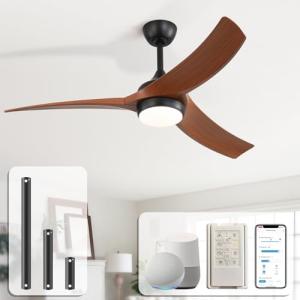
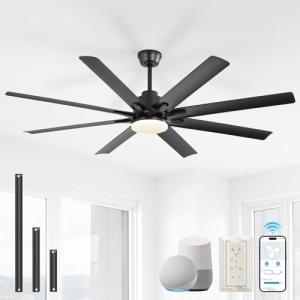
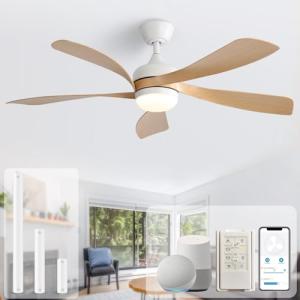
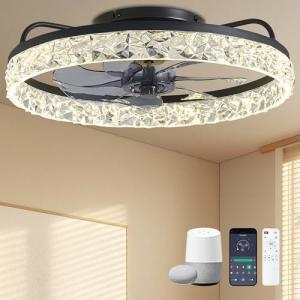
20'' Smart Ceiling Fan
Diamondforge
Product Review Score
4.17 out of 5 stars
171 reviews$109.98 $66.47
💡 Practical Usage Tips
- Separating the 2.4GHz and 5GHz bands on a Wi-Fi router can prevent connection drops during the initial pairing process for most smart fan controllers.
- Mounting the fan antenna away from metal junction boxes and brackets ensures a stronger signal and reduces command latency when using mobile apps.
- Utilizing the reversible motor function in the winter helps push trapped warm air down from the ceiling, which can lead to lower heating costs.
- Performing a physical power cycle by flipping the wall switch can often resolve synchronization issues if the fan becomes unresponsive to voice assistants.
✅ What to Look For & ⚠️ What to Avoid
Must-Haves:
- Energy-efficient Brushless DC (BLDC) Motors are essential for quiet operation and significantly lower electricity consumption compared to older AC models.
- Integrated lighting with CCT Tuning allows the user to switch between warm light for relaxing and cool white light for productivity.
- A high CFM Rating, such as the 6000 CFM found on the Sofucor 52-inch Smart Fan, ensures the unit can effectively move air in larger living spaces or outdoor patios.
Red Flags:
- Small 20-inch fans often have a very narrow and directional airflow, which might not be sufficient for anything larger than a small home office or a laundry room.
- Low-profile units without proper leveling hardware can produce annoying wobbles or clicking sounds if the ceiling surface is not perfectly flat.
- Fans that rely solely on cloud-based apps without an RF remote can become useless if the home internet connection goes down.
🛡️ Build Quality & Performance
The durability of a smart fan is largely determined by the materials used in the blades and the internal motor housing. Modern units often utilize ABS Plastic for the blades because it is lightweight and highly resistant to moisture. This material choice is particularly important for fans intended for outdoor use, as it prevents the warping and drooping that often plagues traditional wood blades in humid environments.
Internally, the shift toward permanent magnet motors has resulted in hardware that runs much cooler and quieter than previous generations. While the exterior chassis might share a similar aesthetic across different brands, the quality of the Logic Board and LED driver is what defines the long-term reliability of the smart features. For instance, the Dreo Smart Ceiling Fan utilizes proprietary firmware that provides smoother dimming transitions and more granular speed controls than generic models.
🏆 Top Recommendations
| Best For | Model Name | Key Feature | Why It Wins |
|---|---|---|---|
| Gaming/Mood | Lumary 52" RGBAI | Addressable RGB Lighting | It offers 46 dynamic scenes and localized color control. |
| Outdoor Patios | Sofucor 52" 3-Blade | 6000 CFM Output | Damp-rated ABS blades provide high-volume air movement. |
| Small Bedrooms | Dreo 44" Flush Mount | 12-Speed DC Motor | The ultra-quiet operation and compact size fit 8ft ceilings. |
❓ Frequently Asked Questions
Can smart fans be used with a standard wall dimmer switch?
No, smart fans should not be connected to a wall dimmer because the electronic controllers for the motor and Wi-Fi require a constant, full voltage to function correctly. Using a dimmer can damage the internal logic board and cause the fan to hum or lose connectivity.
What happens to the smart settings if the power goes out?
Most modern smart fans feature a memory function that restores the last used speed and light settings once power is returned, though some models may require a moment to reconnect to the Wi-Fi network before app controls become available.
Is professional installation required for smart fans?
While many homeowners with basic electrical knowledge can install these units, professional help is recommended if the installation involves mounting a new electrical box or if the ceiling is exceptionally high or sloped.