💡 Practical Usage Tips
- When installing outdoor cameras, always form a drip loop in the cable to prevent rainwater from running directly into the connection port.
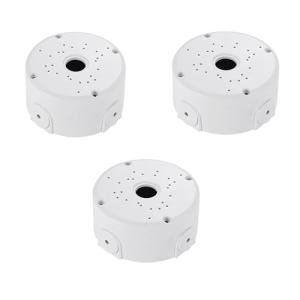
- Utilizing a dedicated junction box shields sensitive baluns and connectors from moisture, which is the primary cause of signal corrosion.
- For cable runs exceeding 100 feet, you should verify that the power adapter provides sufficient amperage to prevent voltage drop when infrared lights activate at night.
- If mounting on uneven surfaces like brick or stucco, using a specialized silicone sealant around the mount base adds a necessary layer of weather protection.
✅ What to Look For & ⚠️ What to Avoid
Must-Haves
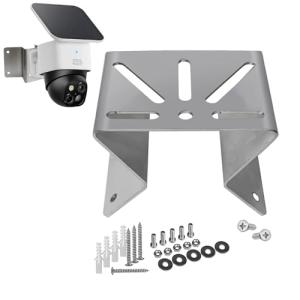
- Seek out mounts constructed from aluminum alloy or stainless steel to ensure structural integrity in high-wind environments.
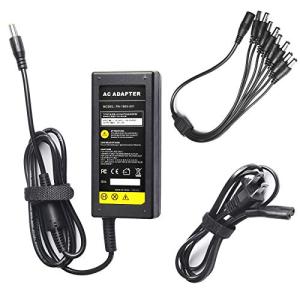
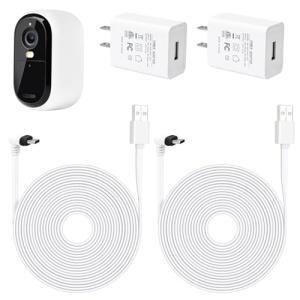
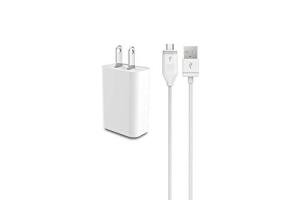
- Prioritize power adapters with regulated output to maintain consistent voltage for sensitive 4K sensors, such as the Lorex 4-in-1 Power Adapter.
- Ensure that any outdoor enclosure features an IP65 or IP66 rating to guarantee protection against dust ingress and water jets.
Red Flags
- Avoid plastic ball-and-socket mounts for heavy cameras, as friction often fails under thermal expansion, causing the camera to droop.
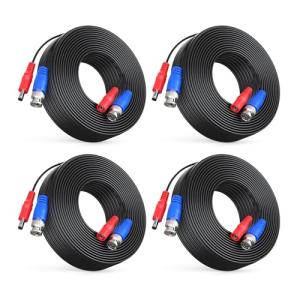
- Be cautious of Copper-Clad Aluminum (CCA) cables for long distances, as they have higher resistance and are more brittle than solid copper.
- Do not use standard indoor power bricks for exterior cameras unless they are housed inside a weather-tight enclosure.
🛡️ Build Quality & Performance
The durability of a surveillance system is directly tied to the materials chosen for its accessories. Hardware exposed to the elements must resist not only moisture but also UV radiation, which can make plastics brittle over time. High-quality mounts, such as the WiTi Stainless Steel Corner Wall Mount, utilize industrial-grade metals to prevent rust and vibration, ensuring steady video feeds even during storms.
Electrical components require equal attention to detail. A robust power supply must handle the peak surge that occurs when cameras switch to night vision mode. Inferior adapters often lack the necessary thermal regulation, leading to overheating and premature failure. Furthermore, cables with proper shielding prevent electromagnetic interference (EMI) from degrading signal quality, a common issue when video lines are run parallel to high-voltage electrical wiring.
🏆 Top Recommendations
| Best For |
Model Name |
Key Feature |
Why It Wins |
| Power Stability |
Lorex 4-in-1 Adapter |
Regulated 5A Output |
Provides consistent power for energy-hungry 4K cameras. |
| Versatile Mounting |
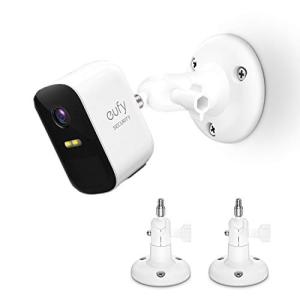
AlertCam Adjustable Mount |
360° Rotation |
Offers flexible positioning for Arlo and Ring systems. |
| Cable Protection |
Bullet Junction Box |
IP66 Aluminum Build |
Essential for hiding and sealing cable connections. |
| Long Runs |
ANNKE 100ft Cable |
Siamese Architecture |
Combines video and power in one line for easy setup. |
❓ Frequently Asked Questions
Why do my cameras go offline at night?
This is a common issue caused by insufficient power. When a camera's infrared (IR) LEDs turn on for night vision, the power draw increases significantly. If the cable is too long or the power adapter is weak, the voltage drops, causing the camera to reboot or shut down.
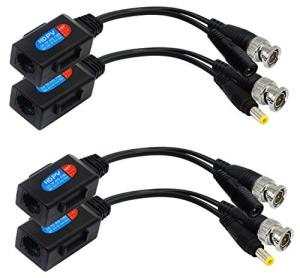
What is a video balun used for?
A video balun allows you to transmit analog video signals over standard Ethernet (Cat5/Cat6) cables instead of coaxial cables. This is often cheaper and allows for longer cable runs with less interference.
Can I use a "No-Drill" mount on brick or stucco?
Adhesive-based mounts generally do not bond well to porous or uneven surfaces like brick. For these materials, it is highly recommended to use a mechanical mount with screws and wall anchors to ensure the camera does not fall.
What is the difference between IP65 and IP66 ratings?
Both ratings indicate strong dust protection. IP65 protects against low-pressure water jets (like rain or a garden hose), while IP66 protects against high-pressure water jets. For most residential security setups, either rating is sufficient for outdoor use.