Transforming an open-air patio or garden into an immersive soundscape requires hardware that balances acoustic precision with rugged environmental resilience. This guide explores the diverse landscape of outdoor audio, from permanent wall-mounted installations to integrated wireless systems. Selecting the right equipment ensures that music remains clear and vibrant, even when competing with wind, traffic, or wide-open spaces.
Outdoor Audio Systems
Discover the perfect sound for your backyard gatherings and outdoor adventures
Product List
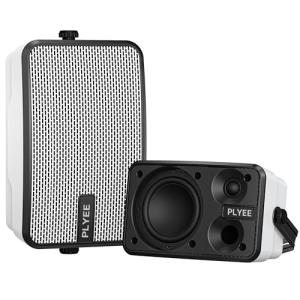
Plyee 400W Bluetooth Speaker Duo
Plyee Audio
Product Review Score
4.56 out of 5 stars
70 reviews$134.98
💡 Practical Usage Tips
- Upgrading to a thicker 14AWG marine-grade wire is a smart move for long cable runs to ensure the sound stays crisp and punchy.
- Applying a small amount of dielectric grease to the terminal connection points helps prevent rust and oxidation in humid or coastal environments.
- Mounting speakers under an eave or overhang provides an extra layer of protection against direct sunlight and keeps the finish from fading over time.
- Positioning the speakers roughly 8 to 10 feet apart creates a more natural stereo soundstage that fills the yard without needing excessive volume.
✅ What to Look For & ⚠️ What to Avoid
Must-Haves:
- Look for an IP66 rating to ensure the equipment can handle heavy rain or accidental splashes from a garden hose.
- Models like the Polk Audio Atrium 4 offer military-grade durability that stands up to extreme temperature shifts.
- High sensitivity ratings are ideal because they allow the speakers to play loudly without straining your amplifier.
- UV-resistant coatings are essential to prevent the speaker cabinets from becoming brittle or chalky after a summer of sun exposure.
Red Flags:
- Be cautious of products listing massive peak wattage but very low RMS power, as the latter is the true measure of sustained performance.
- Avoid using unshielded spring-clip terminals in high-humidity areas without secondary sealing, as they are prone to corrosion.
- Integrated Bluetooth 4.0 units may suffer from shorter range and more frequent dropouts compared to modern 5.0 versions.
- Lightweight plastic cabinets without internal bracing can sometimes vibrate or rattle when the bass gets heavy.
🛡️ Build Quality & Performance
Modern outdoor speakers are engineered to live where traditional electronics fail. High-quality sets utilize polypropylene woofers and aluminum or silk dome tweeters that won't absorb moisture. The cabinets are typically made from dense, injection-molded ABS plastic that acts as a shield against the elements. For instance, the Kicker KB6 uses a sealed design to keep out not just water, but also curious insects that might try to nest inside the housing.
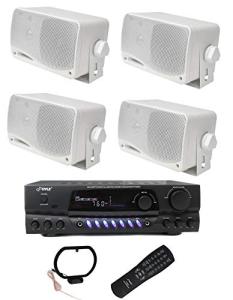
Performance in an open-air environment is vastly different than indoors. Without walls to reflect the sound, low-end frequencies tend to dissipate quickly. To combat this, many systems use a horn-loaded design or larger drivers to move more air. While active systems with built-in amplifiers offer the convenience of wireless streaming, passive speakers connected to a dedicated indoor receiver often provide more long-term reliability and higher signal clarity.
🏆 Top Recommendations
| Best For | Model Name | Key Feature | Why It Wins |
|---|---|---|---|
| Maximum Durability | Polk Atrium 4 | Speed-Lock Mounting | MIL-SPEC 810 certified for extreme weather. |
| High Output | Kicker KB6 | 6.5" Woofer | Excellent sensitivity and loud, clear sound. |
| Wireless Ease | Studiofinix 4-Pack | Bluetooth 5.0 | Covers large areas with a multi-speaker link. |
| Large Events | Gemini PA System | 15" Woofer | Integrated mixer for microphones and media. |
❓ Frequently Asked Questions
What is the difference between active and passive speakers?
Active speakers have a built-in amplifier and usually include Bluetooth, meaning they only need a power outlet to work. Passive speakers require a separate receiver and speaker wire but are generally more durable because they don't have sensitive internal electronics that can overheat.
Do I need to bring my speakers inside during the winter?
If the speakers have a high IP rating and UV treatment, they are designed to stay outside year-round. However, if the area experiences extreme ice or heavy snow, covering them or moving them to a sheltered spot can help extend the life of the mounting brackets and grilles.
Can I connect my phone directly to any outdoor speaker?
You can only connect via Bluetooth if the speaker is an "active" model with a wireless chipset. For "passive" models, you will need to connect your phone to a home theater receiver or a Bluetooth-enabled amplifier that is wired to the speakers.