Creating a seamless audio experience across multiple rooms requires the right central hub to manage signals and power. Whether the goal is to stream high-fidelity music via an app or simply distribute a single radio station to different floors using manual switches, selecting the appropriate hardware is essential. This guide explores the best options for managing distributed sound systems effectively.
Multi-Zone Controllers
Control your home's climate effortlessly from any room
Product List
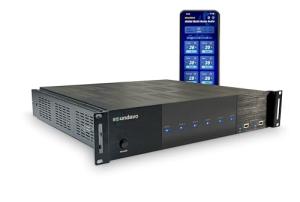
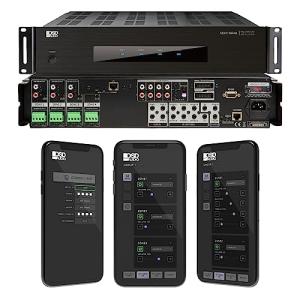
App-Controlled Multi-Room Amplifier
Soundavo
Product Review Score
4.83 out of 5 stars
153 reviews$1,299.99
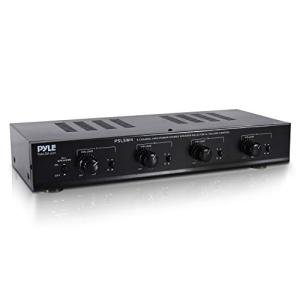
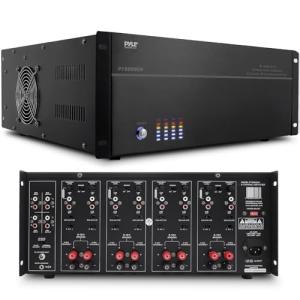
Pyle 4-Channel Speaker Switch
Pyle
Product Review Score
4.99 out of 5 stars
99 reviews$109.99 $100.99
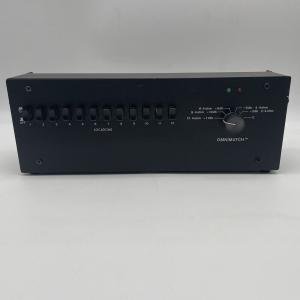
Pyle 4-Channel Speaker Switch
Pyle
Product Review Score
4.7 out of 5 stars
22 reviews$131.75 $98.81
💡 Practical Usage Tips
- Using a wired Ethernet connection instead of Wi-Fi is highly recommended for smart controllers to ensure synchronized music playback without any annoying lags or stutters.
- When installing powerful amplifiers in a media rack, leaving at least one inch of empty space above the unit helps prevent overheating and extends the life of the internal components.
- For passive speaker selectors, using a standard 14-gauge or 16-gauge wire ensures a secure fit in the terminal clips while maintaining good signal strength.
- Labeling each speaker wire at the back of the controller saves a significant amount of time and frustration during future troubleshooting or system upgrades.
✅ What to Look For & ⚠️ What to Avoid
Must-Haves:
- Look for Impedance Protection circuits that prevent your amplifier from being damaged when playing music in multiple rooms at once.
- Reliable systems like the Soundavo WS-series offer dedicated app support, making it easy to change songs from a smartphone.
- Independent volume knobs for each zone allow listeners to enjoy background music in the kitchen while someone else listens at a higher volume on the patio.
Red Flags:
- Avoid units that feel unusually light or flimsy, as they often lack the Heat Sinks necessary to stay cool during long listening sessions.
- Be cautious of wireless controllers that only support older 2.4GHz bands in crowded neighborhoods, as this can lead to frequent connection drops.
- Steer clear of spring-loaded terminals if you plan on using very thick specialty cables, as forcing them can break the plastic housing.
🛡️ Build Quality & Performance
High-quality multi-zone hardware is typically defined by a rugged Steel Chassis that protects internal sensitive electronics from external interference. These units are built to be the workhorses of a home audio system, often hidden away in cabinets where they must operate reliably for years. Models designed for professional use frequently feature gold-plated connectors, which provide a more secure and corrosion-resistant path for the audio signal compared to basic plastic versions.
In terms of performance, the choice between active and passive systems makes a significant difference. Active units, such as the OSD Audio Nero Max8, provide their own power and maintain a very low noise floor, ensuring that music sounds crisp even at low volumes. Passive selectors are excellent for simple setups, but because they rely on the main receiver's power, they can sometimes slightly reduce the overall brightness of the sound when multiple rooms are active at the same time.
🏆 Top Recommendations
| Best For | Model Name | Key Feature | Why It Wins |
|---|---|---|---|
| Modern Streaming | Soundavo WS-Series | App Control | Seamless Spotify & AirPlay integration. |
| High Power | OSD Nero Max8 | 80W Peak Output | Exceptional thermal management and power. |
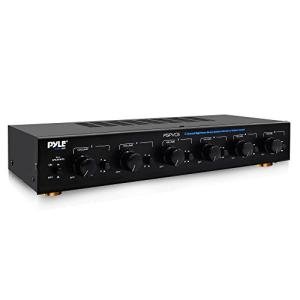
| Large Layouts | Pyle PVCS6 | Autoformers | Maintains audio fidelity across 6 zones. |
| Simple Budget | Pyle PSPV4 | Compact Design | No power outlet required; easy to hide. |
❓ Frequently Asked Questions
What is the difference between an active and passive controller?
An active controller has its own built-in amplifier and requires a power outlet to work. A passive controller acts as a mechanical switchboard that distributes the power coming from your existing stereo receiver without needing its own plug.
Will these controllers work with my existing smart home system?
It depends on the model. Some units include RS232 Ports for professional automation, while others are purely manual. If you want to use voice commands or a phone app, look for models that specifically mention Wi-Fi or IP control.
Can I play different songs in different rooms at the same time?
To play different songs simultaneously, you need a controller with multiple "inputs" or a dedicated streaming module for each zone. Basic selectors usually take one music source and play it in every room you turn on.