Enhancing a home entertainment setup often starts with moving beyond basic television speakers to a more immersive audio environment. Multi-channel soundbar systems offer a streamlined way to achieve surround sound without the complexity of traditional receivers. Whether the goal is crystal-clear dialogue for nightly news or a thundering cinematic experience for movie marathons, selecting the right hardware ensures every sound fills the room exactly as intended.
Multi-Channel Soundbar Systems
Experience immersive audio that fills your entire space and transforms your entertainment
Product List
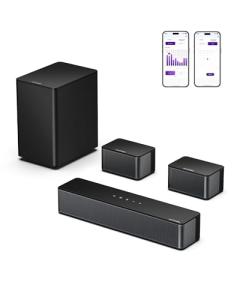

Nakamichi Dolby Atmos Soundbar
Nakamichi
Product Review Score
4.65 out of 5 stars
59 reviews$1,699.00

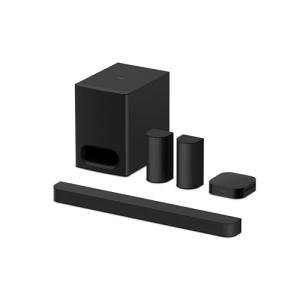
Sony BRAVIA 5.1 Home Theater
Sony
Product Review Score
4.61 out of 5 stars
140 reviews$799.99 $598.00

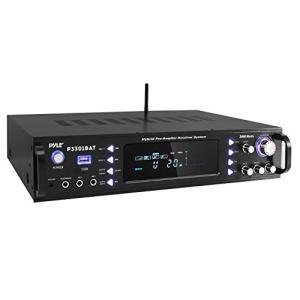
Pyle Bluetooth Home Amplifier
Pyle
Product Review Score
4.22 out of 5 stars
118 reviews$231.99 $159.99
💡 Practical Usage Tips
- Placing the rear speakers at ear level rather than high on a wall helps create a more realistic soundstage for the listener.
- Utilizing the HDMI eARC port on the television is essential for passing high-quality audio formats like Dolby Atmos without losing detail.
- Keeping the subwoofer away from deep corners can prevent the bass from sounding "boomy" or muddy, resulting in a much cleaner low-end response.
- Updating the firmware of the system through its mobile app or a USB drive can resolve minor synchronization issues between the bar and wireless speakers.
✅ What to Look For & ⚠️ What to Avoid
Must-Have Features:
- Look for systems with a dedicated physical center channel to ensure that movie dialogue remains sharp and easy to hear even during loud action scenes.
- Prioritize hardware that supports Dolby Atmos or DTS:X metadata, which allows sound to move vertically and horizontally around the room.
- Consider the Nakamichi 11.2.6 if the goal is to fill a very large room with high sound pressure levels and deep bass.
- Wireless satellite speakers are ideal for rooms where running long cables across the floor is not a practical option.
Red Flags to Watch Out For:
- Be cautious of products that advertise massive wattage ratings, as these figures often represent peak bursts rather than the steady power needed for consistent quality.
- Avoid systems that rely entirely on "virtual" surround sound if the room layout allows for actual rear speakers, as physical units provide a far superior sense of direction.
- Watch out for lightweight plastic enclosures that might vibrate or rattle when the volume is turned up past a certain point.
- Stay away from budget amplifiers that lack active cooling if they are going to be tucked away in a closed cabinet, as they can easily overheat.
🛡️ Build Quality & Performance
The construction of a multi-channel system significantly impacts its longevity and the purity of the audio it produces. High-end models often feature specialized Digital Signal Processing (DSP) that manages how different frequencies are distributed. For instance, the Sony BRAVIA 5.1ch system utilizes a proprietary amplifier layout that is specifically engineered to reduce electronic noise, providing a cleaner signal than generic alternatives.
Durability is also tied to how components handle heat and mechanical stress. While many modern soundbars use sleek plastic shells to fit under thin TVs, the internal bracing must be sturdy enough to prevent the speakers from vibrating the housing. In systems with rechargeable components, such as the JBL Bar 9.1, the battery health becomes a long-term consideration for maintaining the wireless convenience of the detachable surround units.
🏆 Top Recommendations
| Best For | Model Name | Key Feature | Why It Wins |
|---|---|---|---|
| Large Home Theaters | Nakamichi 11.2.6 | Dual 10-inch Subwoofers | Incredible power and spatial coverage. |
| Wire-Free Setup | JBL Bar 9.1 | Detachable Satellites | True wireless surround without permanent cables. |
| Small/Mid Rooms | Ultimea Poseidon D60 | Physical 5.1 Channels | Genuine surround separation at a great price. |
❓ Frequently Asked Questions
What is the difference between 5.1 and 11.2.6 systems?
A 5.1 system uses five speakers and one subwoofer to create horizontal surround sound. An 11.2.6 system adds many more channels, including height speakers for overhead effects and extra subwoofers to balance out the bass across a larger room.
Does a soundbar need HDMI eARC for Dolby Atmos?
While standard HDMI ARC can sometimes handle compressed Atmos, HDMI eARC provides the necessary bandwidth for lossless, high-quality audio signals. It is the best choice for those using Blu-ray players or high-end streaming devices.
Are wired rear speakers better than wireless ones?
Wired speakers are generally more reliable because they are not subject to wireless interference from Wi-Fi routers. However, wireless speakers are much easier to install in rooms where hiding cables under a rug or behind walls is impossible.