Selecting the right microwave involves more than just matching a color to your kitchen decor. Modern units vary significantly in power output, internal capacity, and specialized sensor technology designed to prevent overcooking. Whether the goal is to outfit a compact dormitory or a high-traffic family kitchen, understanding the underlying hardware ensures a reliable long-term investment for the home.
Microwaves
Quick and convenient cooking solutions for every kitchen
Product List
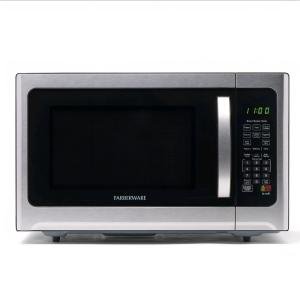
Farberware 1.2 Cu. Ft. Microwave
Farberware
Product Review Score
4.56 out of 5 stars
126 reviews$119.95
💡 Practical Usage Tips
- Wiping down the interior cavity after heating acidic or steamy foods prevents the painted enamel coating from bubbling or rusting over time.
- Allowing at least three inches of clearance around the side exhaust vents ensures the magnetron remains cool and avoids unexpected thermal shutdowns during long cook cycles.
- Using the mute function, often activated by holding down the '8' or '0' key, is a great way to operate the unit in quiet environments without disturbing others.
- Placing heavy ceramic dishes carefully on the glass tray protects the turntable motor from stripping its gears under excessive weight.
✅ What to Look For & ⚠️ What to Avoid
Must-Have Features:
- Units with an integrated humidity sensor, such as the Toshiba 1.2 Cu Ft model, automatically adjust cooking times to prevent food from drying out.
- A power rating of at least 1000 Watts is ideal for maintaining standard cooking times found on most frozen food packaging.
- Stainless steel interiors offer better resistance to long-term wear and are generally easier to sanitize than painted surfaces.
Red Flags to Avoid:
- Be cautious of lightweight doors that feel flimsy, as poor latch alignment can eventually prevent the microwave from starting entirely.
- Models that rely on a thin waveguide cover are more prone to electrical arcing if even a small amount of food splatter is left uncleaned.
- Control panels that feel overly soft or "mushy" may suffer from moisture damage if the unit is placed near a steaming stovetop or coffee maker.
🛡️ Build Quality & Performance
The overall durability of a microwave is often determined by its internal chassis architecture. High-end units utilize thicker steel housings and more robust sound-dampening insulation to create a quieter, more stable cooking experience. In contrast, budget-friendly compact models are designed for light duty, frequently using a transformer-based power supply that adds weight but offers a straightforward path for mechanical repairs.
Performance varies based on how the unit handles power. While standard models use pulse-width modulation to cycle heat on and off, units like the Toshiba 1.6 Cu.ft Smart Sensor Microwave leverage high wattage to process large volumes quickly. The tactile feel of the buttons and the smoothness of the door release are often the first indicators of the component quality inside, with higher-tier models offering a much more refined physical interaction.
🏆 Top Recommendations
| Best For | Model Name | Key Feature | Why It Wins |
|---|---|---|---|
| Daily Versatility | Toshiba 1.2 Cu Ft | Smart Sensor | Excellent balance of power and precision. |
| Dorm/Small Space | Black+Decker 0.7 Cu Ft | Compact Chassis | Fits in tight spaces with reliable basic controls. |
| Advanced Tech | Toshiba 1.6 Cu Ft | Wi-Fi & Voice Control | High 1250W output and smart home integration. |
| Vintage Style | Galanz Retro 0.7 Cu Ft | Retro Aesthetic | Unique design without complicated digital menus. |
❓ Frequently Asked Questions
What does 700 Watts versus 1000 Watts mean for cooking?
A 700-watt unit is considered low power and usually requires about 30% more time to heat dense foods compared to a 1000-watt model. It is best suited for simple tasks like reheating coffee or small snacks.
Why do some microwaves interfere with Wi-Fi?
Microwaves operate on a frequency of 2450MHz, which is very close to the 2.4GHz band used by many Wi-Fi routers. If a unit has standard RF shielding, you might notice a brief drop in internet speed while the oven is running.
Is a humidity sensor worth the extra cost?
Yes, for most users. The sensor detects steam rising from the food and automatically stops the cooking cycle at the ideal moment, which takes the guesswork out of reheating leftovers and prevents rubbery textures.