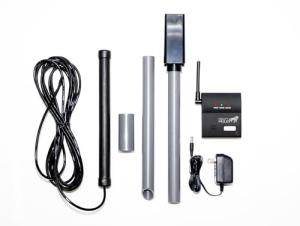
2. 🔌 Choosing Your System: Key Features and Compatibility
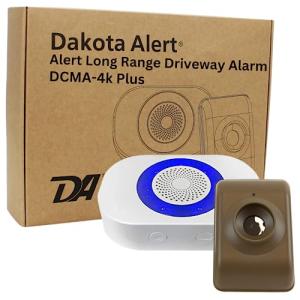
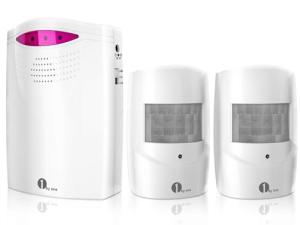
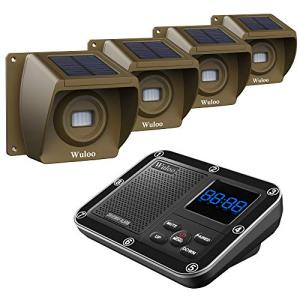
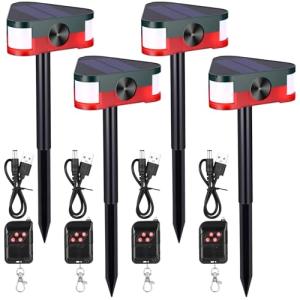
When selecting your Driveway/Yard Alarms , you must choose the appropriate detection technology for your environment and ensure the wireless signal can reliably reach the indoor receiver or your smart hub.
Essential Variations and Detection Technology
Driveway/Yard Alarms utilize specialized technology designed to reduce false alarms in outdoor US environments:
-
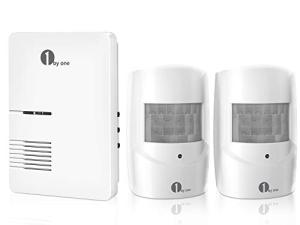
Passive Infrared (PIR) Alarms:
-
Pros: These sensors detect changes in ambient heat caused by people, vehicles, or large animals. They are the most common type, are relatively affordable, and consume very little battery power, maximizing Energy Efficiency . They are suitable for entryways and high-traffic areas.
-
Cons: Prone to false alarms from sudden sunlight changes or heat from a passing car's engine. Requires careful placement away from direct sun.
-
US Lifestyle Context: Ideal for monitoring a relatively straight, short driveway on a suburban lot, providing simple, immediate security alerts.
-
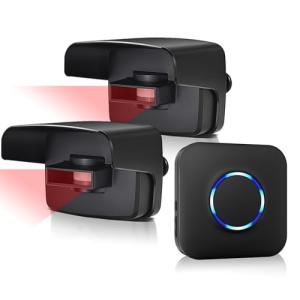
Photo-Beam/Laser Alarms:
-
Pros: These require two separate units—a transmitter and a receiver—that create an invisible light beam between them. The alarm triggers only when the beam is broken. They are extremely accurate for defined perimeters and can span distances of several hundred feet.
-
Cons: Difficult to install, requiring precise alignment of both units. If heavy fog, snow, or rain occurs (common in many US regions), the beam can be temporarily obscured, causing a false alert.
-
US Lifestyle Context: Excellent for securing a long, fenced property line or a wide warehouse perimeter in a commercial or rural setting where accuracy is paramount.
-
Wired/Cellular Alarms (Remote Power):
-
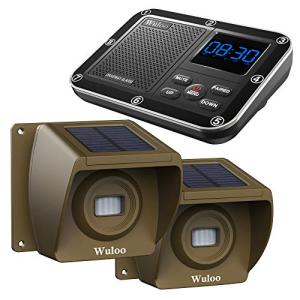
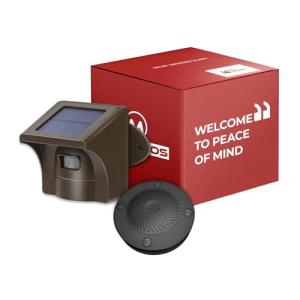
Pros: Some Driveway/Yard Alarms operate using solar power or integrated cellular data service, eliminating the need to run power or rely on distant home Wi-Fi. This is crucial for large ranches or properties where the entryway is a significant distance from the main residence.
-
Cons: Higher unit cost, and cellular requires a monthly data subscription.
-
US Lifestyle Context: Necessary for a vast property in rural Wyoming where the main gate is miles from the house, providing security and reliable 24/7 Monitoring via Remote Access .
Compatibility Protocols
Reliable wireless communication is the core security feature of Driveway/Yard Alarms , dictating how quickly you receive the necessary alerts.
-
Dedicated Radio Frequency (RF): Many Driveway/Yard Alarms use their own proprietary low-frequency RF signal for transmission. This provides a long-distance signal (critical for ranch houses) but often requires a dedicated receiver unit indoors, separate from your main smart hub.
-
Wi-Fi, Z-Wave, or Zigbee: Some alarms connect directly to your smart home ecosystem. Wi-Fi offers direct smartphone alerts, but the signal may struggle to cover the long distance. Z-Wave/Zigbee alarms rely on a mesh network, which must be extended toward the driveway using outdoor-rated smart devices. This is vital for deep 24/7 Monitoring integration.
-
Smart Ecosystem Integration: For true automation, the alarm must link to your smart hub. This allows a detection event to trigger immediate, high-impact actions like turning on lights or locking doors, which you can then check via Remote Access .
3. 🛠️ Installation and Setup Walkthrough
Installing Driveway/Yard Alarms involves strategic positioning to cover the perimeter path precisely while avoiding environmental interference that causes false alarms.
Pre-Installation Preparations
-
Test Signal Range: Before mounting, take the sensor and the indoor receiver/hub to the installation spot and test the signal strength. For long-range alarms, this step is critical to ensure the unit is not installed past its maximum effective distance.
-
Minimize Interference: Find a mounting location for the sensor that avoids pointing directly at reflective surfaces, large metal objects, or moving water, which are common sources of false triggers. Aim the sensor slightly toward the ground, away from direct sunlight, maximizing Energy Efficiency .
-
Power Source: If battery-powered, fully charge the internal battery. If solar-powered, ensure the solar panel is angled south (in the Northern Hemisphere) for maximum sun exposure.
Installation Guide (Typical Battery-Powered PIR Alarm)
-
Mount the Sensor: Secure the sensor unit to a stable post, tree, or wall using the provided screws or strap. The sensor should be 3–4 feet high (waist-level) to best detect human/vehicle mass and ignore small animals.
-
Angle Adjustment: Use the mounting bracket to slightly angle the sensor across the path of the driveway, rather than directly down it. This "cross-pattern" detection is more reliable for catching movement.
-
Receiver Setup: Plug the indoor receiver unit into a central outlet and pair it with the outdoor sensor via the manufacturer’s app or physical button sequence.
-
Sensitivity Calibration: Run a test walk with the alarm armed. Adjust the motion sensitivity settings in the app until the alarm reliably detects a person walking but ignores small objects or environmental movement, optimizing for Energy Efficiency and accurate 24/7 Monitoring .
Troubleshooting Common Issues
-
Issue 1: False Alarms from Wind/Sun.
-
Issue 2: Missed Detections (People Walk Past Unnoticed).
-
Issue 3: Remote Access Notifications Fail Intermittently.
4. Advanced Automation and Maximizing Value
The "early warning" provided by Driveway/Yard Alarms is invaluable, serving as the first security trigger in a layered smart home defense and resource management strategy.
Powerful Automation Scenarios
-
Pre-Entry Welcome and Security: A car is detected by the Driveway/Yard Alarms at 7 PM. An automation identifies the time and triggers the garage door (via the Smart Garage Door Openers ) to pre-open and simultaneously turns on exterior floodlights. This provides a welcoming convenience and uses the light to provide visual security confirmation via Remote Access .
-
Security Deterrence and Camera Activation: An unrecognized person is detected by the alarm at 2 AM. The system triggers the siren (if integrated) and instructs all nearby Outdoor Security Cameras to start recording at maximum resolution. A push alert is sent via Remote Access , giving you critical time to check the live feed before the person reaches the door. This ensures rapid 24/7 Monitoring .
-
Energy Efficiency Lighting: The alarm detects motion in the yard after midnight. An automation turns on the external landscape lighting for only 90 seconds. The Driveway/Yard Alarms then automatically checks for renewed motion. This short, targeted light burst maximizes Energy Efficiency by providing light only when needed and immediately turning it off afterward.
Longevity & Maintenance
Driveway/Yard Alarms are built to withstand the elements, but consistent power and clear vision are essential for long-term 24/7 Monitoring . Regularly wipe the sensor lens clean to prevent dust, water spots, or spiderwebs from interfering with detection. For battery-powered models, proactively check the battery status via Remote Access and replace the batteries promptly. Installing firmware updates often improves battery consumption algorithms, directly boosting the system's Energy Efficiency .
5. COMPLEMENTARY CATEGORY RECOMMENDATIONS
| Recommended Categories |
Why This Category Is Useful Specifically for This Product |
Short Usage Scenario |
| Outdoor Lighting |
The alarm detects motion and triggers exterior lighting to deter intruders and illuminate the area for better video capture. |
The alarm detects a person and automatically turns on the outdoor smart spotlights. |
| Outdoor Security Cams Wired Solar |
Cameras provide video verification and evidence for the motion detected by the long-range driveway alarm. |
The alarm triggers the driveway security camera to start recording the approaching person immediately. |
| Smart Garage Door Openers |
The alarm provides the early warning signal to automatically open the garage door upon the homeowner's arrival. |
The driveway alarm detects the returning vehicle and triggers the smart opener to pre-open the garage door. |
| Alarm Systems |
The driveway alarm is integrated as a critical perimeter sensor, triggering the main security siren and alerts for 24/7 Monitoring . |
The driveway alarm detects an intruder and triggers the main house alarm siren. |
| Smart Power |
An Outdoor Smart Plug is used to provide controlled power to landscape lights or accessories, triggered by the alarm for Energy Efficiency . |
The alarm detects motion and turns on the landscape lights plugged into an outdoor smart plug for a short duration. |
| Smart Displays |
Displays announce the source of the alarm, providing occupants with immediate, centralized awareness of perimeter activity. |
The kitchen smart display announces, "Vehicle detected at the end of the driveway." |
| Central Hubs |
The hub runs the complex geofencing and scheduling logic, integrating the alarm's simple trigger with the house's other smart devices. |
The central hub links the driveway alarm to the Smart Wall Switch controlling the foyer light. |
| Video Doorbells |
The driveway alarm provides early warning, giving the homeowner time to pull up the doorbell camera feed for visual Remote Access confirmation. |
The alarm alerts you, and you check the doorbell camera live view before talking to the visitor. |
Driveway/Yard Alarms are the ultimate tool for proactive perimeter awareness, ending the anxiety of blind spots and providing critical early warnings. You gain superior, long-range 24/7 Monitoring , instant alerts via Remote Access , and smart automations that enhance both security and resource management, boosting Energy Efficiency . Choose the peace of mind that comes with knowing your entire property is covered—install Driveway/Yard Alarms today and take command of your home's boundary.