Maintaining clean indoor air requires more than just owning a purifier; it depends on the quality of the internal components. Selecting the right replacement ensures that dust, pollen, and odors are effectively removed from the living space. This guide explores the essential technical standards and physical builds of various filters to help identify the most reliable options for any environment.
Air Filter Replacements
Breathe easy with our selection of top-notch air filter replacements for every home
Product List
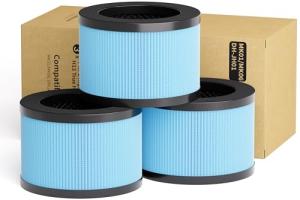
HEPA Filters for AROEVE & Kloudi
Pachamper
Product Review Score
4.67 out of 5 stars
47 reviews$23.99

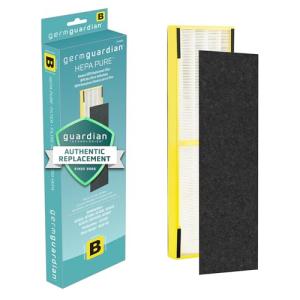
GermGuardian HEPA Filter Replacement
Germguardian
Product Review Score
4.91 out of 5 stars
28 reviews$24.99 $18.88
💡 Practical Usage Tips
- Always perform a manual reset on the air purifier's control panel after installing a new unit to ensure the maintenance timer begins a fresh cycle.
- Check the orientation of the foam or rubber gaskets during installation, as a proper PNEUMATIC SEAL is required to prevent unfiltered air from leaking around the sides.
- Vacuuming the outermost pre-filter layer once every two weeks can significantly extend the life of the more expensive inner HEPA material by removing large clumps of dust and pet hair.
- If the device supports aromatherapy, ensure the fragrance sponges are placed in their designated tray rather than directly on the filter media to maintain proper airflow.
Getty Images Explore
✅ What to Look For & ⚠️ What to Avoid
MUST-HAVES:
- Look for an H13 TRUE HEPA rating, which ensures the media can capture 99.97% of tiny particles like smoke and allergens.
- Prioritize filters with GRANULAR ACTIVATED CARBON, such as those found in the Levoit Core 300-RF, for better odor and gas absorption.
- Seek out high-density foam gaskets that provide enough compression to stop "whistling" noises caused by air bypass.
RED FLAGS:
- Avoid filters that feel flimsy or lack internal reinforcement, as they can collapse under the high suction of "Turbo" or "Max" fan modes.
- Be cautious of carbon layers that are just thin, see-through sponges, as these often lack the mass needed to neutralize heavy cooking smells or smoke.
- Watch out for generic replacements that do not specify their STATIC PRESSURE compatibility, as they might cause the fan motor to overheat or work too hard.
🛡️ Build Quality & Performance
The structural integrity of a replacement filter is just as important as the media inside. High-quality units often feature injection-molded plastic frames or reinforced glue beads that keep the delicate pleats perfectly spaced. This spacing is vital because it allows for even AIRFLOW DISTRIBUTION across the entire surface area. When pleats are bunched together, the motor must work harder, leading to increased noise and reduced efficiency.
For larger systems, such as the Blueair Blue Pure 211+ Genuine Replacement, the use of a collapsible V-shape design and thermal-bonded seams shows how high-end construction supports massive air volumes. In contrast, smaller desktop filters rely on a precise friction fit. Regardless of size, a quality build should feel substantial and fit into the machine's housing with a slight resistance, indicating a tight seal that forces all air through the filtration layers.
🏆 Top Recommendations
| Best For | Model Name | Key Feature | Why It Wins |
|---|---|---|---|
| High Odor Removal | Levoit Core 300-RF | Granular Carbon | Superior gas adsorption compared to coated sponges. |
| Large Rooms | Blueair 211+ Genuine | V-Shape Geometry | Maximized airflow with very low resistance. |
| Bulk Maintenance | Smilyan HPA300 Kit | 6-Pack HEPA | Exceptional value for multi-filter Honeywell units. |
| Compact Use | Cabiclean Core Mini | Fragrance Sponges | Maintains aromatherapy function while filtering. |
❓ Frequently Asked Questions
How often should these filters be replaced?
Most manufacturers recommend a full replacement every 6 to 12 months, though homes with pets or heavy smoke may need to swap them every 3 to 4 months for best results.
What is the difference between HEPA and True HEPA?
TRUE HEPA is a specific grade that must capture at least 99.97% of particles at 0.3 microns, whereas generic "HEPA-type" filters are often less efficient and may let smaller particles pass through.
Can these filters be washed with water?
No, standard HEPA filters are made of delicate fibers that lose their structural integrity and filtering ability if they get wet. Only use a vacuum on the outer pre-filter if it is detachable.